
5-Amino-1MQ: Quinolinium Chemistry and NNMT Enzyme Inhibition
By the TWO+DOS Research Team · Published 2026-08-13
For research use only. Not for human or veterinary use. Not for diagnostic or therapeutic use.
5-Amino-1MQ, systematically 1-methylquinolin-1-ium-5-amine, is a 159.21 g/mol quaternary quinolinium cation bearing a primary aromatic amine at ring position 5. The molecule inhibits nicotinamide N-methyltransferase, a cytosolic S-adenosyl-L-methionine-dependent enzyme, and is catalogued under PubChem CID 950107 with CAS number 42464-96-0 assigned to its iodide salt.
Two features distinguish the compound from most materials in a research inventory. It is a small permanently charged heterocycle rather than a peptide, so it has no sequence, no disulfide bridges and no secondary structure to preserve. And its pharmacology is enzymological in the strict sense: a single named enzyme, a characterised active site, published inhibition constants and a crystallographic record. What follows covers construction and identifiers, the target enzyme and its kinetics, the binding site, comparative potency across inhibitor chemotypes, published cell-level and selectivity data, and the analytical methods used to measure inhibition.
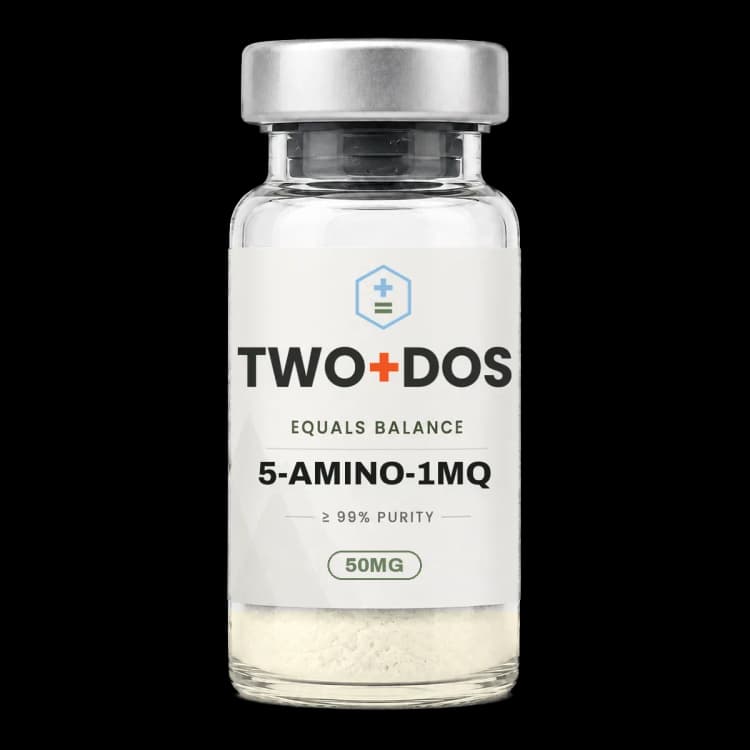
Chemical and physical properties of 5-Amino-1MQ
| Compound class | Quaternary N-methylquinolinium salt, a small heteroaromatic cation. Not a peptide, and carries no amino acid sequence |
|---|---|
| Molecular formula | C10H11N2+ for the free cation; C10H11IN2 for the iodide salt and C10H11ClN2 for the chloride salt |
| Molecular mass | 159.21 g/mol for the cation, monoisotopic mass 159.09222 Da; 286.11 g/mol as the iodide and 194.66 g/mol as the chloride (PubChem computed) |
| CAS number | 42464-96-0, assigned to the iodide salt |
| PubChem CID | 950107 for the cation, 66522933 for the iodide, 176507677 for the chloride |
| InChIKey | ZMJBCEIHNOWCMC-UHFFFAOYSA-O for the cation; JPEZFBFIRRAFNR-UHFFFAOYSA-N for the iodide salt |
| IUPAC name | 1-Methylquinolin-1-ium-5-amine |
| Computed polarity descriptors | XLogP 1.1; topological polar surface area 29.9 square angstroms; 1 hydrogen-bond donor; 1 acceptor; zero rotatable bonds (PubChem computed) |
| Charge state | Permanent single positive charge on the quaternised ring nitrogen, so the molecule remains cationic across the whole pH range and is isolated with a halide counter-ion |
| Molecular target | Nicotinamide N-methyltransferase (NNMT), EC 2.1.1.1, a 264-residue cytosolic enzyme of 29,574 Da catalogued in UniProt as P40261 |
| Reported enzyme potency | IC50 1.2 plus or minus 0.1 micromolar against recombinant human NNMT, roughly tenfold below the parent 1-methylquinolinium scaffold |
What is 5-Amino-1MQ and how is the molecule constructed?
5-Amino-1MQ is built on quinoline, a bicyclic aromatic system of fused benzene and pyridine rings. Methylation of the pyridine-type nitrogen converts that atom into a quaternary ammonium centre carrying a fixed positive charge, while an amino group occupies carbon 5 on the carbocyclic ring. Formula C10H11N2+, monoisotopic mass 159.09222 daltons.
Because the nitrogen is quaternised rather than protonated, the charge cannot be titrated away. There is no basic pKa to cross and no neutral species to form, which is why the material is always isolated as a salt with a halide counter-ion. PubChem catalogues the iodide as CID 66522933 (C10H11IN2, 286.11 g/mol, CAS 42464-96-0) and the chloride as CID 176507677 (C10H11ClN2, 194.66 g/mol). The bare cation is CID 950107, InChIKey ZMJBCEIHNOWCMC-UHFFFAOYSA-O.
The computed descriptors are unusually spare for a molecule with measurable enzyme potency. PubChem reports XLogP 1.1, a topological polar surface area of 29.9 square angstroms, one hydrogen-bond donor, one acceptor and zero rotatable bonds. A rigid, flat, singly charged bicycle of that size has almost nowhere to hide conformational entropy, so essentially all of its affinity has to come from shape complementarity and electrostatics inside the pocket it occupies.
The shorthand name decomposes cleanly. 1MQ is 1-methylquinolinium, the scaffold; the 5-amino prefix names the substituent and its ring position. That parent scaffold is itself familiar in this field for a separate reason: 1-methylquinolinium is the product NNMT forms when it methylates quinoline, which is what makes quinoline a convenient surrogate substrate in enzyme assays.
Which enzyme does 5-Amino-1MQ act on, and what reaction does it catalyse?
5-Amino-1MQ acts on nicotinamide N-methyltransferase (EC 2.1.1.1), a 264-residue cytosolic protein of 29,574 daltons encoded by the NNMT gene and catalogued in UniProt as P40261. The enzyme transfers a methyl group from S-adenosyl-L-methionine to the ring nitrogen of nicotinamide, releasing 1-methylnicotinamide and S-adenosyl-L-homocysteine.
Expression is heavily tissue-weighted. UniProt records the protein as predominantly hepatic, with lower amounts in kidney, lung, skeletal muscle, placenta and heart, and no detection in brain or pancreas. Substrate scope is broader than the name implies: NNMT accepts pyridine and quinoline analogues as well as nicotinamide itself, which is the basis of the surrogate-substrate assays described further down.
Reported steady-state constants place the cofactor well ahead of the substrate in affinity. A 2021 mechanistic review quotes a Michaelis constant of 199 plus or minus 32 micromolar for nicotinamide against 8.5 plus or minus 0.8 micromolar for S-adenosyl-L-methionine, roughly a twentyfold separation, and describes a rapid-equilibrium ordered bi-bi sequence in which the cofactor binds first and products leave in reverse order. A 2017 real-time fluorescence study reached a different conclusion from global curve fitting across a substrate concentration array, favouring a random bireactant model in which either substrate can bind the free enzyme, with each then binding the complementary binary complex about twentyfold more tightly than the apoenzyme. Both descriptions agree on the practical consequence: the two sites are energetically coupled, so occupancy at one changes affinity at the other.
The reaction sits at a junction between two metabolite pools. Methylation removes nicotinamide from the pool available to the NAD+ salvage route and simultaneously consumes a methyl equivalent from S-adenosyl-L-methionine, and the 1-methylnicotinamide produced is exported rather than recycled. Reviews from 2026 describe this as a methyl sink, and it is the reason NNMT catalytic output is usually read out by measuring 1-methylnicotinamide rather than by measuring the enzyme itself.
Where does 5-Amino-1MQ bind within the NNMT active site?
5-Amino-1MQ occupies the nicotinamide substrate pocket rather than the cofactor site, according to the docking work published alongside the original potency series. Predicted binding orientations placed the quinolinium ring against substrate-site residues, and ligand-enzyme interaction scores across the analogue set correlated closely with the inhibition constants measured experimentally.
The structural frame for that pocket was set by crystallography. PDB entry 2IIP resolved human NNMT with S-adenosyl-L-homocysteine bound at 2.05 angstroms, and Peng and colleagues reported the ternary picture in Biochemistry in 2011, solving the enzyme with both S-adenosyl-L-homocysteine and nicotinamide at 2.7 angstroms (PDB 3ROD). Mutagenesis in that paper identified aspartate 197 and tyrosine 20 as the load-bearing active-site residues: substituting either dropped the catalytic efficiency term by two to three orders of magnitude, raising the Michaelis constants for both nicotinamide and the cofactor while lowering the turnover number only modestly. Molecular dynamics accounted for the long-range effect by which the D197A change perturbed cofactor binding from a distance.
Around those two residues, the mechanistic literature repeatedly names tyrosine 25, aspartate 85, tyrosine 86, asparagine 90, aspartate 142, valine 143, alanine 169, serine 201, tyrosine 204 and serine 213 as contact points, with cysteine 165 exploited separately as a handle for covalent chemistry. The adenine ring of the cofactor packs into a hydrophobic slot formed by tyrosine 86 and alanine 169 while hydrogen bonding to aspartate 142 and valine 143, and the ribose hydroxyls hydrogen bond to aspartate 85 and asparagine 90. The UniProt entry now lists nearly thirty deposited human NNMT structures, a substantial fraction of them inhibitor complexes.
Structure-activity work across the scaffold family explains why the 5-amino substitution matters. Screening N-methylated quinolinium, isoquinolinium, pyridinium and benzimidazolium or benzothiazolium analogues singled out quinoliniums as the productive scaffold, and small substituents such as methyl or amino were tolerated on the ring while bulkier groups lost affinity to steric clash. The primary amine at position 5 is close to the largest change the pocket will accept without penalty.
How does 5-Amino-1MQ compare with other NNMT inhibitor chemotypes?
5-Amino-1MQ sits in the low micromolar band of NNMT inhibition, with a reported IC50 of 1.2 micromolar against recombinant human enzyme assayed at 50 micromolar S-adenosyl-L-methionine and 100 micromolar substrate. Two close relatives are roughly an order of magnitude weaker: unsubstituted 1-methylquinolinium at 12.1 micromolar and the reaction product 1-methylnicotinamide at 9.0 micromolar.
A second chemotype reaches far lower numbers by covering both sites at once. Bisubstrate inhibitors tether a nicotinamide-like fragment to an adenosine-like fragment through a linker that threads the methyl transfer tunnel. Policarpo and colleagues built NS1 around an alkyne linker chosen to mimic the linear 180-degree geometry of the transition state, synthesised it in fourteen steps and reported subnanomolar potency, tabulated at 500 picomolar in a later review. Iyamu and colleagues subsequently reported II559 and II802 with inhibition constants of 1.2 and 1.6 nanomolar and better than 5000-fold selectivity over related methyltransferases.
The trade-off is transport, not affinity. Bisubstrate compounds carry the charge and polarity of two nucleotide-like fragments, so biochemical potency in the nanomolar range routinely collapses in intact cells. II559 and II802 reached roughly 150 nanomolar in cells, and a separate 2021 study had to esterify both the amine and the carboxylate of the amino acid side chain to get a single-digit nanomolar bisubstrate inhibitor across a membrane at all, with the isopropyl ester giving the best combination of buffer stability and esterase-dependent release of the parent compound. Against that background the appeal of a 159-dalton monocation with an XLogP near 1 is straightforwardly physicochemical.
Recent chemotypes have narrowed the gap from the other direction. A 2024 series modified the adenine N7 position to a 7-deazaadenosine and tuned the linker, reaching an IC50 of 47.9 plus or minus 0.6 nanomolar with clean selectivity across a human methyltransferase panel. A 2025 piperazine-based series combining quinolone and pyridine pharmacophores reported nanomolar potency for compound 7b with inhibition competitive against both the cofactor and the quinoline substrate. And a 2026 report described non-SAM-mimetic bisubstrate inhibitors found by high-throughput screening, with the lead improving more than a thousandfold over the original hit to sub-micromolar cellular activity.
What cell-level and selectivity data have been published?
5-Amino-1MQ belongs to a methylquinolinium series that was profiled against structurally related methyltransferases and against the enzymes of the NAD+ salvage route. Counter-screening found no inhibition of those off-target enzymes, and permeability panels showed that analogues carrying a primary amine substituent crossed both artificial membranes and Caco-2 monolayers by passive and carrier-mediated routes.
In cultured adipocytes the same series lowered intracellular 1-methylnicotinamide, the direct catalytic product, while intracellular NAD+ and S-adenosyl-L-methionine rose. Measuring the product rather than a downstream phenotype is what makes that readout a target-engagement measure: 1-methylnicotinamide has no route back into the salvage pathway, so its concentration tracks flux through the enzyme.
The transport question deserves separating from the potency question. A permanent monocation does not diffuse across a bilayer the way a neutral drug-like molecule does, and organic cation transporters of the OCT and MATE families are the recognised handlers of small quaternary species; 1-methylnicotinamide itself is well established as an OCT2 and MATE substrate and is used as an endogenous probe for those carriers in transporter studies. The permeability data above report that both passive and active routes contribute for the aminated methylquinoliniums, without resolving which specific carriers are involved.
Cellular consequences of NNMT inhibition have been mapped most thoroughly in disease-model systems rather than with this compound in particular. A 2025 Nature paper traced NNMT activity in cancer-associated fibroblasts to hypomethylation of histone H3 lysine 27, which drove complement secretion and recruitment of myeloid-derived suppressor cells, with genetic loss of the enzyme restoring CD8+ T cell activation across syngeneic tumour models. A 2026 Cell Reports study using spatial transcriptomics on human kidney biopsy tissue linked NNMT-positive tubules to senescence and fibrosis signatures, and found that enzyme overexpression worsened epithelial-to-mesenchymal transition in tubular cells while selective inhibition was protective in organoids. Both illustrate the same methodological point: the phenotype is read out downstream, and the enzymological measurement stays separate.
How is NNMT inhibition measured in the laboratory?
5-Amino-1MQ potency is most often measured with a noncoupled fluorescence assay that swaps quinoline in for nicotinamide, because the methylated product 1-methylquinolinium fluoresces with an emission maximum near 405 nanometres while quinoline itself excites poorly beyond 320 nanometres. Reported detection extends to roughly 40 nanomolar product when the reaction buffer is dilute Tris.
The value of a direct readout is that it removes the coupling enzymes that most methyltransferase assays use to convert S-adenosyl-L-homocysteine into a detectable signal. Coupled formats report on a two-enzyme cascade, so any compound that touches the auxiliary enzymes registers as a false positive. A single-step fluorescence readout follows product appearance in real time, which is what allowed the 2017 study to fit initial-velocity data across a grid of substrate concentrations and argue about the reaction mechanism from the fit quality. The same format generates concentration-response curves quickly enough for library screening.
Alternative formats fill in what fluorescence cannot cover. Fluorescence polarisation competition assays report displacement from the active site rather than turnover. Liquid chromatography with tandem mass spectrometry quantifies 1-methylnicotinamide directly, which is the standard route for cellular and tissue samples; validated bioanalytical methods for that metabolite in human plasma and urine reach lower limits near 2 nanograms per millilitre against basal plasma concentrations of roughly 4 to 120 nanograms per millilitre.
The most detailed kinetic dissection to date came from surface biosensing. A 2025 Journal of Biological Chemistry paper reported a biosensor method that quantifies substrate binding kinetics to the enzyme-cofactor complex, the catalytic rate and the rate of product release from the enzyme-homocysteine complex in a single experiment, described by the authors as the first use of an enzyme surface biosensor to resolve catalysis at that level of detail. The same work established that a class of nicotinamide-analogue inhibitors is itself turned over by the enzyme, with the methylated product acting as the potent species, so on-target biotransformation converts a permeable precursor into a charged, high-affinity inhibitor inside the cell.
Summary of published research
Findings below are reported as published by the cited authors, in the model systems they used. They describe laboratory research, and none of them characterize use in humans.
Peng Y, Sartini D, Pozzi V, Wilk D, Emanuelli M, Yee VC. Structural basis of substrate recognition in human nicotinamide N-methyltransferase. Biochemistry. 2011;50(36):7800-7808. (2011)
- Model system
- Recombinant human NNMT; X-ray crystallography, site-directed mutagenesis, molecular dynamics
- Conditions
- Ternary complex with S-adenosyl-L-homocysteine and nicotinamide solved at 2.7 angstroms (PDB 3ROD); alanine substitutions at active-site residues
- Reported finding
- The structure defined the substrate and cofactor pockets, and substitution of aspartate 197 or tyrosine 20 lowered the catalytic efficiency term by two to three orders of magnitude, raising the Michaelis constants for both nicotinamide and S-adenosyl-L-methionine while reducing the turnover number only modestly.
Neelakantan H, Vance V, Wang HL, McHardy SF, Watowich SJ. Noncoupled Fluorescent Assay for Direct Real-Time Monitoring of Nicotinamide N-Methyltransferase Activity. Biochemistry. 2017;56(6):824-832. (2017)
- Model system
- Cell-free recombinant human NNMT; fluorescence spectroscopy
- Conditions
- Quinoline as surrogate substrate, direct detection of the 1-methylquinolinium product; steady-state velocities across a grid of substrate concentrations
- Reported finding
- The assay tracked product formation in real time without coupling enzymes, and global curve fitting favoured a random bireactant model in which either substrate binds the free enzyme, each then binding the complementary binary complex roughly twentyfold more tightly than the apoenzyme.
Neelakantan H, Wang HY, Vance V, Hommel JD, McHardy SF, Watowich SJ. Structure-Activity Relationship for Small Molecule Inhibitors of Nicotinamide N-Methyltransferase. J Med Chem. 2017;60(12):5015-5028. (2017)
- Model system
- Cell-free recombinant human NNMT enzyme assay with computational docking
- Conditions
- N-methylated quinolinium, isoquinolinium, pyridinium and benzimidazolium or benzothiazolium analogues spanning a thousandfold activity range
- Reported finding
- Quinoliniums emerged as the productive scaffold at very low micromolar potency, with the 5-amino analogue reported at IC50 1.2 plus or minus 0.1 micromolar; docking placed the analogues selectively in the nicotinamide substrate site and interaction scores correlated with the measured IC50 values.
Neelakantan H, Vance V, Wetzel MD, Wang HL, McHardy SF, Finnerty CC, Hommel JD, Watowich SJ. Selective and membrane-permeable small molecule inhibitors of nicotinamide N-methyltransferase reverse high fat diet-induced obesity in mice. Biochem Pharmacol. 2018;147:141-152. (2018)
- Model system
- Cell-free methyltransferase counter-screens; parallel artificial membrane and Caco-2 permeability panels; cultured adipocytes
- Conditions
- Methylquinolinium analogues profiled against structurally related SAM-dependent methyltransferases and against NAD+ salvage pathway enzymes
- Reported finding
- Methylquinolinium scaffolds carrying a primary amine substituent showed high permeability by both passive and active transport, did not inhibit related SAM-dependent methyltransferases or NAD+ salvage enzymes, and lowered intracellular 1-methylnicotinamide while raising intracellular NAD+ and S-adenosyl-L-methionine in cultured adipocytes.
Iyamu ID, Huang R. Mechanisms and inhibitors of nicotinamide N-methyltransferase. RSC Med Chem. 2021;12(8):1254-1261. (2021)
- Model system
- Review of published enzymology and inhibitor pharmacology
- Conditions
- Comparative tabulation of substrate-site, cofactor-site and bisubstrate inhibitors
- Reported finding
- The review reported Michaelis constants of 199 plus or minus 32 micromolar for nicotinamide and 8.5 plus or minus 0.8 micromolar for S-adenosyl-L-methionine under a rapid-equilibrium ordered bi-bi mechanism, and tabulated substrate-site potencies of 1.2 micromolar for 5-amino-1-methylquinolinium, 12.1 micromolar for 1-methylquinolinium and 9.0 micromolar for 1-methylnicotinamide.
Iyamu ID, Zhao T, Huang R. Structure-Activity Relationship Studies on Cell-Potent Nicotinamide N-Methyltransferase Bisubstrate Inhibitors. J Med Chem. 2023;66(15):10510-10527. (2023)
- Model system
- Cell-free enzyme assays plus clear cell renal carcinoma cell lines
- Conditions
- Systematic analogue series built from the prior bisubstrate inhibitor II399
- Reported finding
- II559 and II802 inhibited with constants of 1.2 and 1.6 nanomolar and better than 5000-fold selectivity over related methyltransferases, reaching approximately 150 nanomolar potency in cells, the most cell-potent bisubstrate inhibitors reported at the time.
Li P, Xia C, Kong X, Zhang J. Enhancing nicotinamide N-methyltransferase bisubstrate inhibitor activity through 7-deazaadenosine and linker modifications. Bioorg Chem. 2024;143:106963. (2024)
- Model system
- Cell-free recombinant human NNMT with a human methyltransferase selectivity panel
- Conditions
- Adenine N7 replaced by carbon (7-deazaadenosine) with paired linker variation
- Reported finding
- Lead compound 3-12 inhibited with an IC50 of 47.9 plus or minus 0.6 nanomolar and showed high selectivity across the methyltransferase panel, establishing the adenine N7 position as a modifiable vector in this scaffold.
Akerud T, De Fusco C, Brandt P, et al. Mechanism and kinetics of turnover inhibitors of nicotinamide N-methyl transferase in vitro and in vivo. J Biol Chem. 2025;301(6):108492. (2025)
- Model system
- Cell-free enzymology with surface biosensor kinetics, X-ray crystallography and rat plasma monitoring
- Conditions
- Nicotinamide-analogue inhibitors examined as enzyme substrates; single-experiment quantification of substrate binding, catalysis and product release
- Reported finding
- The class was turned over by the enzyme and the methylated product proved to be the potent inhibitor; the biosensor resolved binding to the enzyme-cofactor complex, catalytic rate and product release from the enzyme-homocysteine complex in one measurement, and plasma monitoring confirmed the biotransformation occurred in rats.
Heide J, Bilecz AJ, Patnaik S, et al. NNMT inhibition in cancer-associated fibroblasts restores antitumour immunity. Nature. 2025;645(8082):1051-1059. (2025)
- Model system
- Spatial transcriptomics, cancer-associated fibroblasts, syngeneic mouse tumour models
- Conditions
- Genetic deletion of NNMT and pharmacological inhibition in the fibroblast compartment
- Reported finding
- NNMT activity in cancer-associated fibroblasts drove hypomethylation of histone H3 lysine 27 and complement secretion that recruited myeloid-derived suppressor cells; removing the enzyme restored CD8+ T cell activation and reduced tumour burden across syngeneic models.
Harikrishna AS, Kesavan V. Identification of novel Piperazine based bisubstrate inhibitors of human nicotinamide N-methyltransferase (hNNMT) with potential anticancer activities. Bioorg Med Chem. 2025;130:118368. (2025)
- Model system
- Cell-free hNNMT kinetics; U87, PANC-1 and HEK293 cell lines
- Conditions
- Piperazine linker joining quinolone and pyridine pharmacophores designed to span the cofactor and substrate pockets
- Reported finding
- Compound 7b inhibited at nanomolar concentrations with kinetics competitive against both S-adenosyl-L-methionine and the quinoline substrate, and showed selective antiproliferative activity in the tumour lines relative to HEK293 cells.
Yoshida S, Kondo N, Uehara S, et al. Structure-Based Drug Discovery of Non-SAM-Mimetic Bisubstrate Inhibitors against Nicotinamide N-Methyltransferase. ACS Med Chem Lett. 2026;17(4):847-855. (2026)
- Model system
- High-throughput screening, structure-based optimisation, rodent tissue distribution
- Conditions
- Bisubstrate series designed without an S-adenosyl-L-methionine-mimetic fragment
- Reported finding
- Lead compound 16 gained more than a thousandfold in potency over the screening hit, reached sub-micromolar cellular activity with high selectivity, and showed pronounced renal distribution with graded enzyme inhibition in rodent kidney.
Puleo N, Allega MF, Niemann CU, Lengyel E. Emerging opportunities for nicotinamide N-methyltransferase (NNMT) inhibitor clinical translation. Trends Pharmacol Sci. 2026;47(6):638-654. (2026)
- Model system
- Review of the published NNMT inhibitor field
- Conditions
- Survey of inhibitor chemotypes, cellular target engagement and oral exposure across published series
- Reported finding
- The review recorded that early small-molecule NNMT inhibitors were limited by insufficient target engagement and low bioavailability, and that more recent compounds combine high cellular affinity for the enzyme with better-characterised profiles across several disease areas.
What laboratory handling information is published?
5-Amino-1MQ is supplied as a crystalline halide salt, most commonly the iodide (CAS 42464-96-0, formula mass 286.11), with the chloride form also catalogued. Research-grade material from chemical suppliers is specified at 98 percent or greater purity by high-performance liquid chromatography, and identity is confirmed by proton nuclear magnetic resonance and mass spectrometry.
Mass spectrometric identity is unusually simple for this compound. Because the analyte is already a cation, electrospray in positive mode detects the intact species without adduct formation, at a monoisotopic m/z of 159.0922 for C10H11N2+. The counter-ion is invisible to the detector, so the same spectrum is obtained from the iodide and the chloride, and salt form has to be established separately by elemental analysis or ion chromatography.
Storage practice follows from the chemistry rather than from any published stability study specific to this molecule. A quaternary ammonium halide is hygroscopic, so desiccated storage keeps the assayed mass honest; iodide salts are additionally photolabile, since iodide oxidises to iodine on light exposure and colours the solid, which is why amber glass and low-temperature storage are the default for the iodide form. Aromatic primary amines are oxidation-prone in solution, so freshly prepared aqueous working stocks are preferred over long-standing ones.
Analytical quantification in biological matrices generally targets the enzyme product rather than the inhibitor. Liquid chromatography with tandem mass spectrometry is the established route for 1-methylnicotinamide, with validated human plasma and urine methods reaching lower limits near 2 nanograms per millilitre. All of the above concerns laboratory characterisation of a research chemical. The material is intended for in vitro and preclinical research use only.
Frequently asked research questions
Is 5-Amino-1MQ a peptide?
No. 5-Amino-1MQ is a small heteroaromatic salt of 159.21 g/mol for the cation, with no amino acid sequence, no disulfide bonds and no secondary structure. Its formula is C10H11N2+ and it is catalogued in PubChem as CID 950107.
How does 5-Amino-1MQ differ from 1-methylquinolinium?
The two share the same N-methylated quinolinium core, and 5-Amino-1MQ adds a primary amine at ring position 5. Published enzyme assays place the aminated compound at IC50 1.2 micromolar against recombinant human NNMT versus 12.1 micromolar for the unsubstituted scaffold, roughly a tenfold difference.
Which salt form is normally supplied?
The iodide is the common commercial form, catalogued as PubChem CID 66522933 with formula C10H11IN2, formula mass 286.11 g/mol and CAS number 42464-96-0. A chloride salt (CID 176507677, C10H11ClN2, 194.66 g/mol) is also catalogued. Both deliver the same 159.21 g/mol cation.
How selective is the methylquinolinium scaffold across methyltransferases?
Counter-screening of the methylquinolinium series reported no inhibition of structurally related S-adenosyl-L-methionine-dependent methyltransferases or of enzymes in the NAD+ salvage route. Bisubstrate chemotypes report selectivity ratios explicitly, with one 2023 series exceeding 5000-fold over related methyltransferases.
What have 2025 and 2026 publications added?
A 2025 kinetic study showed that nicotinamide-analogue NNMT inhibitors are turned over by the enzyme, with the methylated product acting as the potent species. A 2026 series produced non-SAM-mimetic bisubstrate inhibitors with sub-micromolar cellular activity, and a 2026 review surveyed target engagement and bioavailability across the inhibitor field.
5-Amino-1MQ at TWO+DOS
TWO+DOS supplies 5-Amino-1MQ as a research-use-only compound, third-party tested, with certificates of analysis emailed immediately on request.
View the 5-Amino-1MQlisting →Related research overviews
References
- PubChem CID 950107: 5-Amino-1-methylquinolinium (cation record)
- PubChem CID 66522933: 5-Amino-1-methylquinolinium iodide, CAS 42464-96-0
- UniProt P40261: Nicotinamide N-methyltransferase, Homo sapiens
- RCSB PDB 3ROD: human NNMT with S-adenosyl-L-homocysteine and nicotinamide
- Structural basis of substrate recognition in human nicotinamide N-methyltransferase
- Structure-Activity Relationship for Small Molecule Inhibitors of Nicotinamide N-Methyltransferase
- Noncoupled Fluorescent Assay for Direct Real-Time Monitoring of NNMT Activity
- Mechanisms and inhibitors of nicotinamide N-methyltransferase
- High-Affinity Alkynyl Bisubstrate Inhibitors of Nicotinamide N-Methyltransferase (NNMT)
- Mechanism and kinetics of turnover inhibitors of nicotinamide N-methyl transferase in vitro and in vivo
- Structure-Based Drug Discovery of Non-SAM-Mimetic Bisubstrate Inhibitors against NNMT
- Emerging opportunities for nicotinamide N-methyltransferase (NNMT) inhibitor clinical translation
For research use only. Not for human or veterinary use. Not for diagnostic or therapeutic use.