
BPC-157: Research Overview, Chemistry and Published Literature
By the TWO+DOS Research Team · Published 2026-08-12 · Reviewed 2026-08-13
For research use only. Not for human or veterinary use. Not for diagnostic or therapeutic use.
BPC-157 is a synthetic 15-residue peptide with the sequence GEPPPGKPADDAGLV, molecular weight 1419.5 g/mol, studied since 1993 in preclinical models of tissue repair. It corresponds to a fragment of a larger protein reported in human gastric juice, and it has no identified receptor.
This overview covers what the published record actually establishes about the molecule: its chemistry and identity data, the signaling pathways associated with it in cell and animal studies, how it has been characterized analytically, and where the literature has acknowledged gaps. Findings are reported as their authors published them, in the model systems used. Nothing here describes use outside a laboratory.
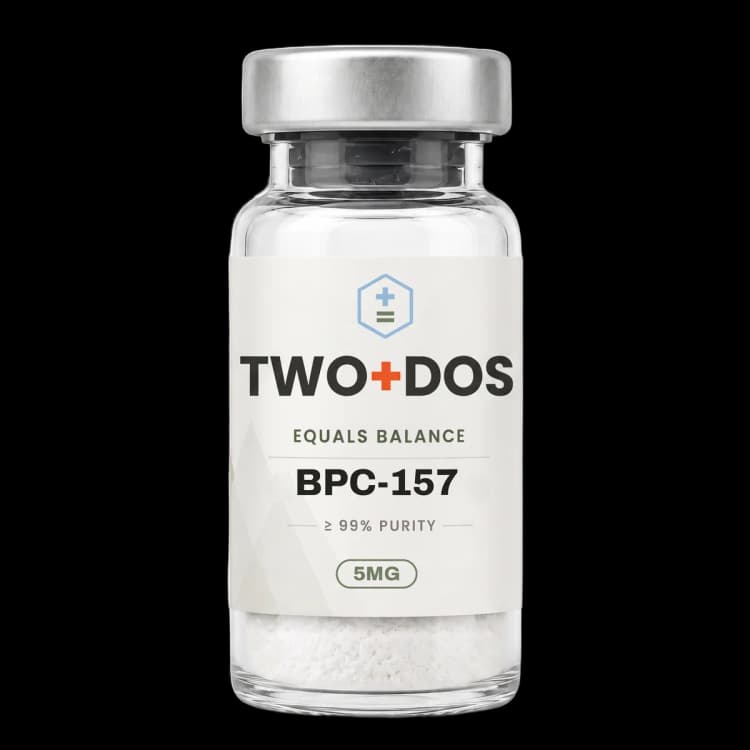
Chemical and physical properties of BPC-157
| Sequence | H-Gly-Glu-Pro-Pro-Pro-Gly-Lys-Pro-Ala-Asp-Asp-Ala-Gly-Leu-Val-OH (GEPPPGKPADDAGLV), 15 residues |
|---|---|
| Molecular formula | C62H98N16O22 (free base) |
| Molecular weight | 1419.5 g/mol; monoisotopic mass 1418.704 Da |
| CAS number | 137525-51-0 (free base). The acetate salt carries a separate number, 1628202-19-6, and the two are not interchangeable. |
| PubChem CID | 9941957 |
| InChIKey | HEEWEZGQMLZMFE-RKGINYAYSA-N |
| Computed polarity descriptors | XLogP -9; topological polar surface area 573 square angstroms; 16 hydrogen-bond donors; 24 acceptors; 39 rotatable bonds (PubChem computed) |
| Cysteine or methionine content | None. Disulfide scrambling and methionine oxidation are therefore not degradation routes for this sequence. |
| Physical form | Supplied as a solid, commonly lyophilized. No peer-reviewed characterization of physical form has been published. |
| Quantitative solubility | No peer-reviewed mg/mL value has been published. The computed descriptors above indicate a highly polar, hydrophilic molecule. |
What is BPC-157?
BPC-157 is a linear pentadecapeptide first described by Sikiric and colleagues in 1993. That report characterized a gastric juice peptide of approximately 40,000 relative molecular mass, designated BPC for body protection compound, and identified a 15-amino-acid fragment within it, designated BPC 157, as the portion associated with the activity they observed. The name reflects that origin rather than any established endogenous signaling role.
A 2025 review notes that although the sequence was identified as part of a peptide from human gastric juice, it shows no sequence homology with known intestinal peptides. The molecule contains a proline block at positions 3 through 5 and a single lysine at position 7, and carries no cysteine and no methionine.
In pharmaceutical development it has appeared under several code designations from Pliva in Croatia: PL-10, PLD-116, PL 14736 and BPC-15. Papers using those names are studying the same molecule, which matters when searching the literature, since a search on the common name alone misses a substantial part of the record.
Does BPC-157 have a known receptor?
No specific receptor for BPC-157 has been identified. This is a defining feature of the literature and it constrains how the molecule can accurately be described. Reviews of the mechanism work state that studies have inferred probable mechanisms rather than establishing a binding partner, and that most of them position the peptide as interacting with the nitric oxide system. Describing BPC-157 as an agonist or antagonist of any receptor is not supported.
What the record contains instead is a set of pathway-level associations measured downstream. The most direct receptor-adjacent finding comes from Hsieh and colleagues, who reported increased VEGFR2 expression together with promoted receptor internalization in endothelial cells, in association with activation of the VEGFR2-Akt-eNOS axis. Blocking endocytosis abolished the effect, which places receptor trafficking rather than direct binding at the center of the proposed mechanism.
A second nitric-oxide-linked pathway was reported by the same group in isolated vessel preparations, where increased Src and caveolin-1 phosphorylation coincided with reduced eNOS to caveolin-1 binding and a measured 1.35-fold increase in endothelial nitric oxide production. Effects on cell migration in that study were abolished by a nitric oxide scavenger.
A 2026 study by Yildirim and colleagues carried that nitric-oxide-linked work into human tissue. Working with residual internal mammary artery rings from twelve elective coronary artery bypass graft procedures, they recorded concentration-dependent reduction of phenylephrine-induced contraction across 0.01 to 1 milligram per milliliter, significantly greater where the endothelium was left intact. Pre-incubation with the nitric oxide synthase inhibitor L-NAME attenuated the response and the endothelium-intact and endothelium-denuded curves converged at higher concentrations, leaving a residual endothelium-independent component the authors did not resolve.
That result should be read within the limits its own literature acknowledges. A 2025 published reply from Jozwiak and colleagues argues that gain or loss of an effect under L-NAME or L-arginine is not by itself proof of nitric oxide involvement. The 2026 vessel work therefore extends a pathway association into human tissue and does not identify a binding partner.
Which pathways have been studied in preclinical models?
Beyond the nitric oxide and VEGFR2 work, four other pathway associations recur across independent reports. In rat tendon fibroblasts, Chang and colleagues measured concentration-dependent increases in FAK and paxillin phosphorylation without changes in total protein, alongside increased cell migration and unchanged proliferation. The same group later identified growth hormone receptor as substantially up-regulated by microarray, confirmed at mRNA and protein level with reported increases up to sevenfold by day three, with time-dependent JAK2 phosphorylation when growth hormone was added.
In a rat alkali-burn model with parallel endothelial cell work, Huang and colleagues reported increased VEGF expression and attributed the observed effects to ERK1/2 pathway activation, with downstream involvement of c-Fos, c-Jun and Egr-1. Egr-1 up-regulation had been reported earlier by Tkalcevic and colleagues studying PL 14736, where the peptide was more active than PDGF-BB in stimulating early collagen organization in rat models.
A 2026 report by Jelinska and colleagues added the first published enzyme-kinetic measurement for the sequence itself. Using a modified Ellman assay with Lineweaver-Burk analysis, BPC-157 was characterized as a reversible competitive inhibitor of acetylcholinesterase with an inhibition constant of 0.48 millimolar, alongside two rationally designed hybrid analogs, CIARA-1 and CIARA-2, at 0.24 and 0.29 millimolar. The authors place that potency far below clinically used acetylcholinesterase inhibitors and describe the scaffold as a starting point for optimization. It is a measured interaction with a defined protein, which most of the mechanism literature does not offer.
One methodological caveat belongs with any summary of this literature. A large share of the in vivo corpus originates from a single research group in Zagreb, using a characteristic paired-level design that compares two widely separated amounts against nitric oxide synthase probes. Independent replication exists but is limited relative to the volume of publications.
A 2025 exchange in Pharmaceuticals put figures on that imbalance. A comment from the originating group restated its position that the peptide acts on angiogenesis and on the nitric oxide system while retaining protective function, citing its own animal work across ocular, oncological and neurological models. The reply reported that over 80 percent of records indexed under the compound name trace to that group, that independent laboratories have contributed only a handful of in vitro or short-term rodent reports, and that experiments routinely use a single amount level.
How stable is BPC-157, and what is known about its disposition?
Stability in gastric conditions is the property most consistently reported as distinguishing this peptide from others studied in the same models. Multiple reviews state that it remains intact in human gastric juice for more than 24 hours, unlike the majority of peptides, and a 2025 structural review attributes this to the N-terminal glycine acting as a stabilizer against protease degradation together with the proline residues resisting non-specific proteolysis.
That stability sits alongside a short plasma residence. A rat and dog pharmacokinetic study reported an elimination half-life of the parent peptide under 30 minutes with linear kinetics, bioavailability of roughly 14 to 19 percent in rats and 45 to 51 percent in dogs, and excretion primarily via urine and bile with rapid metabolism into fragments. A 2026 formulation-science review frames the contrast between brief plasma presence and effects reported over longer intervals as an unresolved question rather than a settled one.
Degradation is proteolytic, as the metabolite work confirms. Nontargeted profiling using isotope-labelled peptide identified nine metabolites, eight arising from conventional amide-bond cleavage and one from a previously undescribed route. Analytical work has also verified stability in urine over at least four days, and a 2026 multi-compound method from Mazzarino and colleagues reported variation below 15 percent for at least two months at minus 20 degrees Celsius across every blood matrix examined.
That same 2026 method sharpened the picture at ordinary temperatures. Held at 4 and 22 degrees Celsius, the peptide degraded completely in serum within one week while remaining detectable throughout the study in dried blood spots. Matrix and storage temperature therefore govern whether the intact sequence survives to analysis, and a stability figure quoted without both variables states very little.
How is BPC-157 characterized analytically?
The most rigorous published characterization comes from anti-doping laboratories rather than pharmaceutical development. Cox and colleagues confirmed the sequence of confiscated material as GEPPPGKPADDAGLV and developed a weak cation-exchange solid-phase extraction method with LC-MS detection, reporting a limit of detection of 0.1 nanograms per milliliter in urine with an r-squared of 0.998 and precision below 20 percent.
Tian and colleagues extended this with an ultra-high-performance liquid chromatography high-resolution mass spectrometry workflow using 13C and 15N labelled peptide for nontargeted metabolite identification, reporting detection limits of 0.01 to 0.11 nanograms per milliliter, linearity across 0.02 to 50 nanograms per milliliter at an r-squared above 0.999, and recovery above 90 percent.
A 2026 workflow from Mazzarino and colleagues broadened the approach to a 54-compound panel covering dried blood spots, serum and plasma, built on a single microextraction step with methanol and water at 8:2 by volume followed by liquid chromatography with high-resolution mass spectrometry. Across the panel, detection limits ran from 0.05 to 1.25 nanograms per milliliter, matrix effects from 5 to 33 percent and extraction yields from 15 to 80 percent, with no interference reported at the retention times of the analytes.
For identity and purity verification in a laboratory setting, these methods define what is achievable. No compendial monograph for BPC-157 exists in USP or equivalent pharmacopoeias, so purity specifications come from individual supplier certificates rather than from a standardized reference method. The 2025 reply by Jozwiak and colleagues makes the same point from the supply side, observing that purity figures of 99 percent circulate without accompanying HPLC, ion chromatography or mass spectrometry data in the published record.
What is the regulatory status of BPC-157?
BPC-157 is not an approved product in the United States or elsewhere. A 2026 review in Pharmaceutics states directly that no pharmaceutical-grade formulation has been developed or validated, that the compound lacks permeability characterization and formal excipient-compatibility studies, and that available human data derive from fewer than 30 subjects. A 2025 systematic review covering 1993 to 2024 identified 36 studies, of which 35 were preclinical and one was clinical. A 2025 narrative review by McGuire and colleagues reached a comparable position, counting three small pilot reports in the human record and describing the compound as investigational pending controlled clinical study.
Formulation science has begun to appear in the literature that the 2026 review found missing. A 2026 materials paper by Arunim and colleagues characterized a chitosan composite hydrogel loaded with the peptide, using electron microscopy and FTIR, and reported hydrogen bonding between the peptide and the chitosan backbone, encapsulation of 98.9 percent, release of 81.2 percent within 24 hours and hemolysis below 5 percent. That work characterizes a laboratory material and stops well short of a validated pharmaceutical formulation.
On the regulatory process itself, one fact is documented in the Federal Register. Notice 2026-07361, published 16 April 2026, set a Pharmacy Compounding Advisory Committee meeting for 23 and 24 July 2026 and listed BPC-157-related bulk drug substances, both free base and acetate, among the substances scheduled for review in connection with the section 503A bulk drug substances list. That notice is a public record of a review process, not an approval.
The practical consequence for laboratory work is that BPC-157 is supplied as a research compound. Material sold for research carries labelling stating it is not for human or veterinary use, and the absence of a validated formulation, a compendial monograph, and standardized naming across salts and derivatives are documented characterization issues that a laboratory sourcing the compound should account for.
Summary of published research
Findings below are reported as published by the cited authors, in the model systems they used. They describe laboratory research, and none of them characterize use in humans.
Sikiric P, Petek M, Rucman R, Seiwerth S, Grabarevic Z, Rotkvic I, et al. A new gastric juice peptide, BPC. An overview of the stomach-stress-organoprotection hypothesis. Journal de Physiologie (Paris) (1993)
- Model system
- Rat organoprotection models; foundational characterization report
- Conditions
- Rat models across multiple tissue types at the low ranges published
- Reported finding
- A gastric juice peptide of approximately 40,000 relative molecular mass was described, and a 15-amino-acid fragment within it was identified as the portion considered essential for the activity observed. This is the origin citation for the sequence.
Tkalcevic VI, Cuzic S, Brajsa K, Mildner B, Bokulic A, Situm K, et al. Enhancement by PL 14736 of granulation and collagen organization in healing wounds and the potential role of egr-1 expression. European Journal of Pharmacology (2007)
- Model system
- Rat tissue-repair models with gene-expression analysis
- Conditions
- Rat models with PDGF-BB as comparator; endpoints granulation tissue formation, collagen organization, egr-1 expression
- Reported finding
- PL 14736, the Pliva development designation for this peptide, was reported as more active than PDGF-BB in stimulating early collagen organization, and up-regulated egr-1 gene expression with associated downstream pathways.
Chang CH, Tsai WC, Lin MS, Hsu YH, Pang JH. The promoting effect of pentadecapeptide BPC 157 on tendon healing involves tendon outgrowth, cell survival, and cell migration. Journal of Applied Physiology (2011)
- Model system
- Ex vivo rat Achilles tendon explants and cultured rat tendon fibroblasts
- Conditions
- Explant outgrowth, hydrogen peroxide oxidative-stress survival assay, transwell migration, immunoblot for FAK and paxillin phosphorylation
- Reported finding
- Fibroblast outgrowth from explants increased, cell survival under oxidative stress increased, and in vitro migration increased with concentration. FAK and paxillin phosphorylation rose while total protein levels were unaltered, implicating FAK-paxillin pathway activation.
Chang CH, Tsai WC, Hsu YH, Pang JH. Pentadecapeptide BPC 157 enhances the growth hormone receptor expression in tendon fibroblasts. Molecules (2014)
- Model system
- Primary rat Achilles tendon fibroblasts (passages 2 to 4, male Sprague-Dawley rats)
- Conditions
- Concentration series 0, 0.1, 0.25 and 0.5 micrograms per milliliter for 24 hours; time course at 0.5 micrograms per milliliter over 1 to 3 days
- Reported finding
- Microarray analysis identified growth hormone receptor as substantially up-regulated, confirmed at mRNA and protein level with increases up to approximately sevenfold by day three. Adding growth hormone to pretreated cells increased viable cell number and PCNA expression, with time-dependent JAK2 phosphorylation.
Huang T, Zhang K, Sun L, Xue X, Zhang C, Shu Z, et al. Body protective compound-157 enhances alkali-burn wound healing in vivo and promotes proliferation, migration, and angiogenesis in vitro. Drug Design, Development and Therapy (2015)
- Model system
- Rat alkali-burn model in vivo with endothelial cell culture in vitro
- Conditions
- Topical application in the rat model; in vitro proliferation, scratch and transwell migration, tube formation; VEGF expression and ERK1/2 phosphorylation endpoints
- Reported finding
- Wound closure accelerated with improved histological endpoints including granulation tissue development and collagen formation. In endothelial culture, proliferation and migration increased and VEGF expression rose, with the effect attributed to ERK1/2 pathway activation.
Hsieh MJ, Liu HT, Wang CN, Huang HY, Lin Y, Ko YS, et al. Therapeutic potential of pro-angiogenic BPC157 is associated with VEGFR2 activation and up-regulation. Journal of Molecular Medicine (2017)
- Model system
- Chick chorioallantoic membrane assay, endothelial cell culture, rat hind-limb ischemia model
- Conditions
- Vessel density, laser-Doppler perfusion, VEGFR2 expression and endocytosis, Akt and eNOS phosphorylation, tube formation
- Reported finding
- Vessel density increased in vivo and in vitro, VEGFR2 expression rose, receptor internalization was promoted in endothelial cells, and the VEGFR2-Akt-eNOS signaling axis was activated with increased endothelial tube formation.
Hsieh MJ, Lee CH, Chueh HY, et al. Modulatory effects of BPC 157 on vasomotor tone and the activation of Src-Caveolin-1-endothelial nitric oxide synthase pathway. Scientific Reports (2020)
- Model system
- Isolated rat thoracic aortic rings with and without endothelium, endothelial cells, rat vascular smooth muscle cells
- Conditions
- Vascular studies at 0.1, 1, 10 and 100 micrograms per milliliter; cellular signaling at 1.0 micrograms per milliliter for 30 to 60 minutes
- Reported finding
- At 100 micrograms per milliliter, relaxation of endothelium-intact rings measured 37.6 plus or minus 5.7 percent, falling to 10.0 plus or minus 5.1 percent with the eNOS inhibitor L-NAME present. Src and caveolin-1 phosphorylation increased, eNOS to caveolin-1 binding fell to 50 percent of control, and endothelial nitric oxide production rose 1.35-fold.
Cox HD, Miller GD, Eichner D. Detection and in vitro metabolism of the confiscated peptides BPC 157 and MGF R23H. Drug Testing and Analysis (2017)
- Model system
- In vitro metabolism plus analytical method development in human urine
- Conditions
- Weak cation-exchange solid-phase extraction with LC-MS; limit of detection 0.1 ng/mL; four-day urine stability assessment
- Reported finding
- The sequence of the confiscated material was confirmed as GEPPPGKPADDAGLV. In vitro incubation produced a stable metabolite predicted to be detectable in urine. The method achieved linearity at an r-squared of 0.998 with precision below 20 percent.
Tian T, Jing J, Li Y, Wang Y, Deng X, Shan Y. Stable Isotope Labeling-Based Nontargeted Strategy for Characterization of the In Vitro Metabolic Profile of BPC-157 by UHPLC-HRMS. Molecules (2023)
- Model system
- In vitro metabolic incubation with UHPLC-HRMS analysis; human urine matrix for method validation
- Conditions
- 13C and 15N labelled peptide; detection limits 0.01 to 0.11 ng/mL; linear range 0.02 to 50 ng/mL
- Reported finding
- Nine metabolites were identified through a nontargeted isotope-labelling workflow. The validated method for the parent peptide and five main metabolites reported an r-squared above 0.999 and recovery above 90 percent.
Mateescu DM, Gavrilescu DM, Constantinescu FE, Oancea C, Ilie AC, Folescu R, et al. BPC-157 as an Investigational Peptide Therapeutic: Biopharmaceutical Challenges, Formulation Strategies, and Translational Development Barriers. Pharmaceutics (2026)
- Model system
- Narrative review of biopharmaceutical and formulation literature
- Conditions
- Literature review; no new experimental work
- Reported finding
- The review described unusual stability in gastric juice alongside a sub-30-minute plasma half-life, stated that no pharmaceutical-grade formulation has been developed or validated, and concluded that the principal barrier to translation is an absence of fundamental pharmaceutical science rather than an absence of measured biological activity.
Sikiric P, Seiwerth S, Skrtic A, Staresinic M, Strbe S, Vuksic A, et al. BPC 157 Therapy: Targeting Angiogenesis and Nitric Oxide's Cytotoxic and Damaging Actions, but Maintaining, Promoting, or Recovering Their Essential Protective Functions. Comment on Jozwiak et al. Multifunctionality and Possible Medical Application of the BPC 157 Peptide - Literature and Patent Review. Pharmaceuticals 2025, 18, 185. Pharmaceuticals (Basel) (2025)
- Model system
- Published comment on a prior literature and patent review; no new experimental work
- Conditions
- Commentary; Pharmaceuticals 18(10):1450
- Reported finding
- The originating Zagreb group restated its position that the peptide acts on angiogenesis and on the nitric oxide system while retaining protective function, drawing on its own animal work across ocular, oncological and neurological models. The comment is the group's direct response to methodological criticism of the corpus.
Jozwiak M, Bauer M, Kamysz W, Kleczkowska P. Reply to Sikiric et al. BPC 157 Therapy: Targeting Angiogenesis and Nitric Oxide's Cytotoxic and Damaging Actions, but Maintaining, Promoting, or Recovering Their Essential Protective Functions. Comment on Jozwiak et al. Multifunctionality and Possible Medical Application of the BPC 157 Peptide - Literature and Patent Review. Pharmaceuticals 2025, 18, 185. Pharmaceuticals (Basel) (2025)
- Model system
- Published reply; methodological appraisal of the BPC-157 literature
- Conditions
- Reply to the comment above; Pharmaceuticals 18(10):1451; no new experimental work
- Reported finding
- The reply reported that over 80 percent of records indexed under the compound name trace to a single research group, that independent laboratories have contributed only a handful of in vitro or short-term rodent reports, and that experiments routinely use a single amount level despite a sub-30-minute plasma half-life. It argued that gain or loss of an effect under L-NAME or L-arginine is not proof of nitric oxide involvement, and noted that 99 percent purity claims are not accompanied by published HPLC, ion chromatography or mass spectrometry data.
McGuire FP, Martinez R, Lenz A, Skinner L, Cushman DM. Regeneration or Risk? A Narrative Review of BPC-157 for Musculoskeletal Healing. Current Reviews in Musculoskeletal Medicine (2025)
- Model system
- Narrative and scoping review of the preclinical and human record
- Conditions
- Literature review, Curr Rev Musculoskelet Med 18(12):611-619; no new experimental work
- Reported finding
- The review summarized the pathway associations reported in animal models, chiefly VEGFR2 and nitric oxide synthesis, and recorded that the human record consists of three small pilot reports. It concluded that the compound should be regarded as investigational pending rigorous controlled clinical study.
Yildirim AK, Dastan AO, Demeli Ertus M, Ensarioglu M, Karabacak K, Pehlivanoglu B. Endothelium-Dependent Nitric Oxide-Mediated Vasorelaxant Effects of BPC 157 in Human Internal Mammary Artery. Journal of Clinical Medicine (2026)
- Model system
- Ex vivo human internal mammary artery rings (n = 12) from residual tissue of elective coronary artery bypass graft procedures
- Conditions
- Endothelium-intact and endothelium-denuded rings contracted with phenylephrine at 3 x 10^-6 M; cumulative concentration-response curves for the peptide across 0.01 to 1 milligram per milliliter; parallel rings pre-incubated with the nitric oxide synthase inhibitor L-NAME at 10^-6 M
- Reported finding
- Concentration-dependent reduction of phenylephrine-induced contraction was recorded in both groups and was significantly greater in endothelium-intact rings. L-NAME increased contractile responsiveness and attenuated the relaxation, with the two curves converging at higher concentrations. The authors described an endothelium-dependent nitric oxide mechanism with a residual endothelium-independent component, and stated that further molecular and in vivo work is required.
Jelinska J, Jozwiak M, Szeleszczuk L, Sikora K, Kamysz W, Kleczkowska P, Gackowski M, Grodner B. BPC-157 and Its Novel Hybrid Analogs as Inhibitors of Acetylcholinesterase. International Journal of Molecular Sciences (2026)
- Model system
- Cell-free acetylcholinesterase enzyme kinetics supported by molecular modeling
- Conditions
- Modified Ellman assay with Lineweaver-Burk analysis; BPC-157 compared against two rationally designed hybrid analogs, CIARA-1 and CIARA-2, each joining a BPC-157-derived fragment to an arginine-containing C-terminal sequence
- Reported finding
- All three compounds showed a competitive mechanism, with Michaelis-Menten constants rising while maximum velocity was unchanged. Inhibition constants were 0.24 millimolar for CIARA-1, 0.29 millimolar for CIARA-2 and 0.48 millimolar for BPC-157, with IC50 values of 2.52, 2.73 and 2.80 millimolar respectively. The report states this is the first investigation of the parent peptide against this enzyme, and places potency far below clinically used acetylcholinesterase inhibitors.
Mazzarino M, Colpaert T, Deventer K, Van Eenoo P. Rapid and harmonized analytical workflow for the determination of peptidic and non-peptidic doping agents in dried and liquid blood matrices. Analyst (2026)
- Model system
- Analytical method development and validation across dried blood spots, serum and plasma
- Conditions
- Single microextraction step with 500 microliters of methanol and water at 8:2 by volume; liquid chromatography with high-resolution mass spectrometry; 54-compound panel including BPC-157
- Reported finding
- Detection limits across the panel ran from 0.05 to 1.25 nanograms per milliliter, with matrix effects of 5 to 33 percent, extraction yields of 15 to 80 percent and no interference at analyte retention times. All compounds varied by less than 15 percent for at least two months at minus 20 degrees Celsius in every blood matrix. At 4 and 22 degrees Celsius, BPC-157 degraded completely in serum within one week while remaining detectable throughout in dried matrices.
Arunim, Dagar M, Solanki M, Sarita, Mishra R, Gulliya S, Bajpai S. Fabrication and characterization of biocompatible BPC-157 based chitosan hydrogel. 3 Biotech (2026)
- Model system
- Materials characterization of a chitosan and BPC-157 composite hydrogel with in vitro microbiological and hemocompatibility assays
- Conditions
- Scanning and transmission electron microscopy, FTIR, water vapor transmission, encapsulation and release profiling, antibacterial assays against Escherichia coli and Staphylococcus aureus, hemolysis assay
- Reported finding
- FTIR indicated hydrogen bonding between the peptide and the chitosan backbone, taken as evidence of incorporation into the matrix, and electron microscopy showed a porous structure. Encapsulation was 98.9 plus or minus 0.8 percent with 81.2 plus or minus 2.9 percent released within 24 hours, water vapor transmission was 2,270 plus or minus 35 grams per square meter per day, bacterial inhibition reached 45.9 percent for E. coli and 65.0 percent for S. aureus, and hemolysis was below 5 percent.
What laboratory handling information is published?
Less than the volume of literature suggests. No peer-reviewed quantitative solubility value in milligrams per milliliter was located for this peptide, and the 2026 formulation review states that no formal solubility profiling across physiologically relevant pH values has been published. Computed descriptors from PubChem indicate a strongly hydrophilic molecule with an XLogP of minus 9 and a topological polar surface area of 573 square angstroms, consistent with aqueous handling, but a computed descriptor is not a measured value.
Storage figures in circulation come from supplier specifications rather than from published stability studies. Those specifications are a supplier's statement about their own material and belong in a certificate of analysis, not in a citation. The published stability data that does exist concerns analytical matrices: verified stability in urine over at least four days, and variation below 15 percent for at least two months at minus 20 degrees Celsius across the blood matrices examined by a 2026 doping-control method. The same 2026 method recorded complete degradation in serum within one week at 4 and 22 degrees Celsius, so a stability figure quoted without its matrix and its temperature carries no information.
For reference when reading methods sections, published in vitro work has used aqueous working concentrations in the range of 0.1 to 100 micrograms per milliliter depending on the assay, with cell-signaling studies commonly at 0.5 to 1.0 micrograms per milliliter. These are the concentrations the cited studies report using in their own experimental systems.
Frequently asked research questions
What is the amino acid sequence of BPC-157?
GEPPPGKPADDAGLV, written in full as H-Gly-Glu-Pro-Pro-Pro-Gly-Lys-Pro-Ala-Asp-Asp-Ala-Gly-Leu-Val-OH. It is 15 residues, linear, with no disulfide bonds. The sequence is confirmed at PubChem CID 9941957 and was independently verified by mass spectrometry in an analytical study of confiscated material.
Why do two different CAS numbers appear for BPC-157?
137525-51-0 refers to the free base, and 1628202-19-6 refers to the acetate salt. Material is commonly supplied as the acetate. The two numbers describe chemically distinct materials and should not be used interchangeably on documentation or in procurement records.
Does BPC-157 have a receptor?
None has been identified. The published mechanism work describes pathway-level associations, most consistently with the nitric oxide system, rather than binding to a defined receptor. Reviews are explicit that mechanisms have been inferred from downstream readouts, so agonist or antagonist language is not supported by the record.
How much human data exists on BPC-157?
Very little. A 2026 review states that available clinical data derive from fewer than 30 subjects. A 2025 systematic review of the literature from 1993 to 2024 identified 36 studies, of which 35 were preclinical. A 2025 narrative review counted three small pilot reports in the human record. A Phase I trial begun in 2015 in 42 volunteers was cancelled in 2016.
What has been published on BPC-157 most recently?
The 2025 and 2026 record has moved toward chemistry, analysis and formulation. A 2026 enzyme-kinetics report measured competitive acetylcholinesterase inhibition for the sequence and for two hybrid analogs, CIARA-1 and CIARA-2. A 2026 ex vivo study recorded endothelium-dependent, nitric-oxide-linked relaxation in human internal mammary artery rings. A 2026 doping-control workflow characterized detection limits and matrix-dependent stability across dried blood spots, serum and plasma. A 2026 materials paper characterized a chitosan composite hydrogel loaded with the peptide. Alongside these, a 2025 comment and reply exchange in Pharmaceuticals set out the methodological objections to the existing corpus, including the concentration of publications within one research group.
Is BPC-157 an approved product?
No. It is not approved in the United States or elsewhere, and no pharmaceutical-grade formulation has been developed or validated. Federal Register notice 2026-07361 documents that BPC-157-related bulk substances were listed for review by the Pharmacy Compounding Advisory Committee in July 2026. Material is supplied for laboratory research only.
BPC-157 at TWO+DOS
TWO+DOS supplies BPC-157 as a research-use-only compound, third-party tested, with certificates of analysis emailed immediately on request.
View the BPC-157listing →Related research overviews
References
- PubChem CID 9941957: molecular formula, mass, InChIKey and computed descriptors
- Sikiric et al. 1993, Journal de Physiologie Paris: origin report (PMID 8298609)
- Tkalcevic et al. 2007, European Journal of Pharmacology (PMID 17628536)
- Chang et al. 2011, Journal of Applied Physiology (PMID 21030672)
- Chang et al. 2014, Molecules (PMID 25415472)
- Huang et al. 2015, Drug Design Development and Therapy (PMID 25995620)
- Hsieh et al. 2017, Journal of Molecular Medicine (PMID 27847966)
- Hsieh et al. 2020, Scientific Reports (PMID 33051481)
- Cox et al. 2017, Drug Testing and Analysis (PMID 28035768)
- Tian et al. 2023, Molecules (PMID 37959764)
- Mateescu et al. 2026, Pharmaceutics: formulation and translation review (PMID 42198317)
- Jozwiak et al. 2025, Pharmaceuticals: structure and stability review (PMID 40005999)
- Vasireddi et al. 2025, HSS Journal: systematic review 1993-2024 (PMID 40756949)
- Sikiric et al. 2025, Pharmaceuticals: comment on the Jozwiak literature and patent review (PMID 41155565)
- Jozwiak et al. 2025, Pharmaceuticals: reply on single-amount designs, group concentration and purity documentation (PMID 41155566)
- McGuire et al. 2025, Current Reviews in Musculoskeletal Medicine: narrative review (PMID 40789979)
- Yildirim et al. 2026, Journal of Clinical Medicine: ex vivo human internal mammary artery (PMID 42123221)
- Jelinska et al. 2026, International Journal of Molecular Sciences: acetylcholinesterase inhibition kinetics (PMID 42278509)
- Mazzarino et al. 2026, Analyst: 54-compound LC-HRMS workflow and blood-matrix stability (PMID 42328738)
- Arunim et al. 2026, 3 Biotech: chitosan composite hydrogel characterization (PMID 42555375)
- Federal Register notice 2026-07361: PCAC meeting and 503A bulk substances agenda
For research use only. Not for human or veterinary use. Not for diagnostic or therapeutic use.