
NMN (Nicotinamide Mononucleotide): Chemistry, Transport and NAD+ Precursor Research
By the TWO+DOS Research Team · Published 2026-08-13
For research use only. Not for human or veterinary use. Not for diagnostic or therapeutic use.
NMN, nicotinamide mononucleotide, is a 334.22 g/mol pyridine nucleotide sitting one enzymatic step below NAD+ in the mammalian salvage pathway. Carrying CAS number 1094-61-7 and PubChem CID 14180, the molecule is the product of nicotinamide phosphoribosyltransferase and the substrate of the three NMN adenylyltransferases that finish NAD+ synthesis.
Interest in the molecule as a laboratory material rests on a simple premise and a complicated reality. The premise is that supplying the penultimate intermediate should raise the pool of the final product. The reality is that a permanently charged, highly polar phosphate ester does not walk through a membrane, and the 2025 tracer literature indicates most of an oral amount never reaches tissue as an intact molecule at all. What follows covers structure and identifiers, the contested transport routes, gut and hepatic handling, what human trials have actually measured, recent rodent and formulation work, and how the material is produced and characterised.
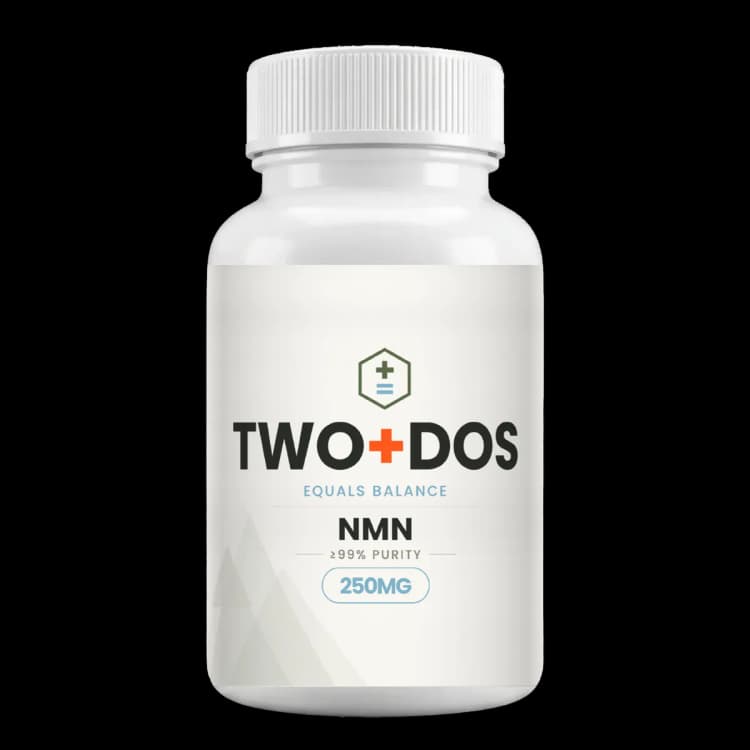
Chemical and physical properties of NMN
| Compound class | Pyridine nucleotide. The 5-prime monophosphate of nicotinamide riboside, and the immediate precursor of NAD+. Not a peptide, so no amino acid sequence exists for it |
|---|---|
| Molecular formula | C11H15N2O8P, the zwitterionic form catalogued by PubChem under CID 14180 |
| Molecular mass | 334.22 g/mol; exact and monoisotopic mass 334.05660 Da (PubChem computed) |
| CAS number | 1094-61-7, assigned to beta-NMN; EC number 214-136-5 |
| PubChem CID | 14180, record title Nicotinamide mononucleotide |
| InChIKey | DAYLJWODMCOQEW-TURQNECASA-N |
| Stereochemistry | PubChem describes the (2R,3S,4R,5R) ribofuranosyl configuration, in which nicotinamide is joined to carbon 1 of ribose through a beta-N-glycosidic bond to the pyridine nitrogen |
| Charge state | Net-neutral zwitterion: a permanent positive charge sits on the quaternary pyridinium nitrogen while the phosphate monoester carries the balancing negative charge, so PubChem reports a formal charge of 0 |
| Computed polarity descriptors | XLogP minus 3.5; topological polar surface area 166 square angstroms; 4 hydrogen-bond donors; 8 acceptors; 5 rotatable bonds; complexity 455 (PubChem computed) |
| Ultraviolet absorbance | The nicotinamide chromophore is the analytical handle; published reversed-phase methods detect the molecule at 266 nm |
| Natural occurrence | Reported in edamame, broccoli, cucumber and cabbage at 0.25 to 1.88 mg per 100 g, and in avocado and tomato at 0.26 to 1.60 mg per 100 g (Mills et al., Cell Metabolism, 2016) |
What is NMN and where does the molecule sit in NAD+ metabolism?
NMN occupies the penultimate position of the NAD+ salvage route. Nicotinamide phosphoribosyltransferase condenses nicotinamide with phosphoribosyl pyrophosphate to yield NMN, and NMN adenylyltransferases 1 to 3 then join it to the adenylyl group of ATP, producing NAD+. Molecular formula C11H15N2O8P; monoisotopic mass 334.0566 daltons.
Structurally the molecule is exactly half of NAD+ with the pyrophosphate bridge cut. Nicotinamide is attached to carbon 1 of a ribofuranose ring through a beta-N-glycosidic bond at the ring nitrogen, which makes that nitrogen quaternary and gives the pyridinium ring a permanent positive charge; a phosphate monoester occupies the 5-prime hydroxyl. Balance of those two charges is why PubChem records a formal charge of zero for CID 14180 despite the quaternary centre. The polarity descriptors follow from the same architecture: XLogP minus 3.5, topological polar surface area 166 square angstroms, four hydrogen-bond donors and eight acceptors.
Endogenous abundance is low and dietary abundance is lower still. Mills and colleagues reported concentrations of 0.25 to 1.88 mg per 100 g in edamame, broccoli, cucumber and cabbage, and 0.26 to 1.60 mg per 100 g in avocado and tomato, in Cell Metabolism in 2016. Those figures are two to three orders of magnitude below the quantities used in the human trials described below, which is the arithmetic reason food sources and supplementation research are not comparable subjects.
How does NMN enter cells, and why is the transport route contested?
NMN cannot cross a lipid bilayer unaided, so every account of cellular entry requires either a carrier or a chemical modification at the cell surface. Grozio and colleagues proposed the carrier answer in Nature Metabolism in 2019, identifying the gene Slc12a8 as a sodium-dependent NMN transporter enriched in murine small intestine and itself regulated by NAD+.
Kinetics in that paper put the Michaelis constant at 34.1 plus or minus 8.3 micromolar in overexpressing NIH3T3 cells. Selectivity was narrow: the carrier moved NMN but not nicotinamide riboside, and in reconstituted proteoliposomes replacing sodium with lithium cut tritiated NMN incorporation by roughly 80 percent, while chloride proved dispensable. Knockdown lowered NAD+ in jejunum and ileum, and expression rose in the aged ileum.
Contestation followed within months. Schmidt and Brenner published a matters-arising piece in the same journal in 2019 titled as an absence of evidence for the assignment, disputing the analytical methods and the transport data; the original authors replied in the same issue. Neither side conceded, and the honest summary is that the assignment is reported and disputed rather than settled. A parallel and less contested route runs outside the cell: the ecto-5-prime-nucleotidase CD73 removes the phosphate to give nicotinamide riboside, which equilibrative nucleoside transporters carry inward, after which nicotinamide riboside kinases 1 and 2 restore the phosphate. Under that model extracellular NMN is a reservoir rather than a passenger. Cissé and colleagues returned to the carrier question in iScience in 2026 with brain electrophysiology, reporting that mice lacking Slc12a8 failed to respond to NMN in the supramammillary nucleus, which is a functional rather than a biochemical argument for the gene mattering.
What happens to orally supplied NMN before it reaches tissue?
NMN taken by mouth meets the gut microbiota before it meets a transporter, and isotope tracing published in 2025 reframed that encounter. Yaku and colleagues reported in Science Advances that only a small portion of oral NMN was absorbed intact from mouse small intestine, most being converted by gut bacteria to nicotinic acid.
A second arm of the same work bypassed the gut entirely and produced a comparable result. Compounds delivered straight into the bloodstream were rapidly degraded to nicotinamide and secreted into bile, where microbial deamidation again generated nicotinic acid that returned to the liver for NAD+ synthesis through the Preiss-Handler route. Enterohepatic circulation, on that account, does much of the work attributed to the intact precursor, and the liver preferentially uses the recycled deamidated form.
Circulating measurements are consistent with limited but real appearance of the intact molecule. Pencina and colleagues reported in the Journal of Gerontology in 2023 that a microcrystalline polymorph given at 1,000 mg once or twice daily for 14 days to 32 adults aged 55 to 80 raised blood NMN 1.7-fold and 3.7-fold above baseline respectively, with NAD+ metabolome members higher at days 8 and 14. Blood NMN and tissue NMN remain separate quantities, and no human study has resolved the second one.
What have human supplementation trials measured?
NMN trials in humans have measured one analyte well and clinical endpoints poorly. Yi and colleagues randomized 80 middle-aged healthy adults in a multicentre trial reported in GeroScience in 2023, comparing placebo against 300, 600 and 900 mg daily for 60 days, and found blood NAD significantly raised in every active group at day 30 and day 60.
Two 12-week trials at 250 mg per day, the quantity matching a single 250 mg tablet, tell a similar story. Katayoshi and colleagues gave 36 healthy middle-aged participants 125 mg twice daily in Scientific Reports in 2023 and found serum nicotinamide significantly higher than placebo, while pulse wave velocity trended downward without reaching a significant between-group difference. Morifuji and colleagues studied 60 older adults in GeroScience in 2024 and reported significantly higher blood NAD+ and metabolite levels, while the pre-specified primary stepping-test outcome showed no significant difference at either 4 or 12 weeks.
Pooled analysis has sharpened the same asymmetry. A 2026 systematic review in Nutrients assembled 15 trials spanning 250 to 2,000 mg daily and 14 days to 24 weeks, and found no significant pooled effect on fasting glucose, glycated haemoglobin or lipid measures. A 2026 post hoc analysis of the 80-participant trial, published in GeroScience, is more useful as chemistry than as clinical inference: baseline whole-blood NAD sat at a median 7.21 nanomolar with an interquartile range of 5.5 to 10.6, and increases in NAD tracked small increments in haemoglobin, at 0.027 percent per unit with a 95 percent confidence interval of 0.010 to 0.045, and in red blood cell count. Raising the analyte is reproducible; converting that into an endpoint is not.
What have recent rodent and formulation studies reported?
NMN appears across an unusually wide range of 2026 rodent model systems, and the mechanistic reports are more specific than the clinical ones. Cissé and colleagues recorded from mouse supramammillary nucleus in iScience in 2026, finding that NMN raised burst firing in neurons expressing Slc12a8 and restored aged-animal rates toward young values.
Hepatic work published in the British Journal of Pharmacology in 2026 used aflatoxin B1 at 0.75 mg per kg as the insult and beta-NMN at 300 mg per kg as the intervention, and traced the protective signal to the gut microbiota, bile acid and farnesoid X receptor axis; deleting intestinal FXR signalling abolished the effect, which localises the mechanism outside the liver despite the liver being where injury was scored. A separate 2026 report in the Journal of Cardiovascular Translational Research described NMN raising SIRT3 in diabetic mouse myocardium, with reduced acetylation of GSK3-beta and reduced Smad3 phosphorylation accompanying lower alpha-smooth-muscle-actin and collagen I.
Formulation chemistry is the other active thread, and it exists because of the polarity problem described earlier. Lin and colleagues characterised lactoferrin-modified lipid nanoparticles in Frontiers in Chemistry in 2026 at approximately 147 nanometres mean particle size, 5.02 percent loading capacity and 41.8 percent surface modification, reporting 62 percent permeability in their blood-brain barrier model. A chitosan-based pH-responsive system published in Colloids and Surfaces B in 2026 reached 86.53 percent encapsulation efficiency with roughly 70 percent cumulative release at pH 7.4. Encapsulation is the same admission in two different chemistries: the free molecule does not distribute well on its own.
How is research-grade NMN produced and characterised?
NMN is manufactured by chemical phosphorylation of nicotinamide riboside, by chemoenzymatic routes, and increasingly by whole-cell or multi-enzyme biocatalysis, and the last of these is where the recent optimisation literature sits. Cost in enzymatic routes is dominated by ATP consumption, since nicotinamide phosphoribosyltransferase and the upstream phosphoribosyl pyrophosphate supply both draw on it.
Tang and colleagues addressed exactly that in the Journal of Agricultural and Food Chemistry in 2025, engineering ATP recycling into a cascade and optimising reaction conditions. Reported enzyme activity reached 21.9 plus or minus 0.65 units per millilitre, ATP regeneration improved 2.3-fold over the conventional arrangement, and the final titre reached 14.6 plus or minus 0.51 grams per litre, roughly 5.4 times the starting yield. A 2025 review in Synthetic and Systems Biotechnology mapped the wider pathway network and identified the rate-limiting enzymes that such work targets, and separate 2025 work examined the bacterial PnuC nucleoside transporter as a way to move intermediates across the production strain membrane.
Characterisation rests on chromatography rather than mass alone, for a specific structural reason. Reversed-phase methods resolve the molecule with ultraviolet detection at 266 nm, and Xiang and colleagues published a validated procedure in 2023 on a C18 column of 4.6 by 250 millimetres at 5 micrometres, 30 degrees Celsius, 1.0 millilitre per minute, with a methanol and ammonium formate gradient. Mass spectrometry alone cannot distinguish the beta anomer from the alpha anomer, since the two share formula and exact mass, so anomeric assignment requires chromatographic separation or nuclear magnetic resonance. The two expected related substances follow from the two cleavable bonds: nicotinamide from hydrolysis of the glycosidic bond, and nicotinamide riboside from loss of the phosphate.
Summary of published research
Findings below are reported as published by the cited authors, in the model systems they used. They describe laboratory research, and none of them characterize use in humans.
Cissé Y, Brace CS, Hsu V, Yuede CM, Rensing N, Wong M, Imai SI. Nicotinamide mononucleotide stimulates the activity of bursting slow-oscillation neurons in the supramammillary nucleus and enhances REM sleep. iScience (2026)
- Model system
- Mouse, in vivo electrophysiology and genetic deletion
- Conditions
- Recordings from supramammillary nucleus GABAergic neurons expressing Slc12a8 in young, aged and Slc12a8-deficient mice
- Reported finding
- NMN raised burst firing frequency in slow-oscillation neurons expressing Slc12a8, restoring rates in aged mice toward young-animal values. Transporter-deficient animals showed no firing response to NMN, reduced hippocampal theta power and impaired novel object recognition.
Wang Y, Medina AA, Liu X, Liu Y, Du W, Wang Y, Yang J, Jiang T, Chen X, Huang K, Liu Y. β-Nicotinamide mononucleotide reduces aflatoxin B1 induced liver injury via the gut microbiota-bile acid-farnesoid X receptor (FXR/NR1H4) axis. British Journal of Pharmacology (2026)
- Model system
- Mouse, hepatotoxicant challenge with microbiota and receptor manipulation
- Conditions
- Aflatoxin B1 at 0.75 mg per kg with beta-NMN at 300 mg per kg; intestinal FXR signalling disrupted in a separate arm
- Reported finding
- Beta-NMN attenuated hepatic injury markers, and the effect required intestinal farnesoid X receptor signalling and an intact gut microbiota, placing the initiating step in the intestine rather than the liver.
Lin Y, Zhao F, Wang J, Ping S, Wu K, Chen Y, Zheng X, Xu H. Brain-targeting lipid nanoparticles of nicotinamide mononucleotide: preparation, optimization, and characterization. Frontiers in Chemistry (2026)
- Model system
- Formulation chemistry with an in vitro blood-brain barrier model
- Conditions
- Lactoferrin-modified lipid nanoparticles; particle sizing, loading and permeability characterisation
- Reported finding
- Mean particle size measured approximately 147 nanometres with 5.02 percent loading capacity and 41.8 percent lactoferrin modification. Permeability across the barrier model reached 62 percent, against negligible transit for the unencapsulated molecule.
Kuerec AH, Wang W, Fokke KDM, Yi L, Lin Z, et al. Association between blood nicotinamide adenine dinucleotide levels and blood laboratory parameters at baseline and after nicotinamide mononucleotide supplementation in middle-aged healthy individuals: post hoc analysis of a randomized, double-blinded, placebo-controlled clinical trial. GeroScience (2026)
- Model system
- Human, post hoc analysis of a randomized placebo-controlled trial
- Conditions
- 80 participants of mean age 49.4 plus or minus 6.8 years; 300, 600 or 900 mg daily for 60 days
- Reported finding
- Median baseline whole-blood NAD measured 7.21 nanomolar with an interquartile range of 5.5 to 10.6. Higher baseline NAD associated with 0.24 percent higher lymphocytes and 0.36 percent lower neutrophils per nanomolar. NAD increases associated with haemoglobin rises of 0.027 percent (95 percent CI 0.010 to 0.045) and red blood cell rises of 0.025 percent (95 percent CI 0.009 to 0.042).
Yang W, Huang J, Tang Z, Chen C, Sun Y. Safety and Metabolism-Related Outcomes of Oral Nicotinamide Mononucleotide Supplementation in Adults: A Systematic Review and Meta-Analysis. Nutrients (2026)
- Model system
- Systematic review and meta-analysis of randomized trials
- Conditions
- 15 trials in adults; 250 to 2,000 mg daily for 14 days to 24 weeks
- Reported finding
- Pooled analysis found no significant effect on body mass index, fasting glucose, glycated haemoglobin or lipid measures. Diastolic blood pressure showed a small decrease and insulin resistance indices a non-significant downward trend.
Yaku K, Palikhe S, Iqbal T, Hayat F, Watanabe Y, et al. Nicotinamide riboside and nicotinamide mononucleotide facilitate NAD+ synthesis via enterohepatic circulation. Science Advances (2025)
- Model system
- Mouse, stable-isotope tracing by oral and systemic routes
- Conditions
- Labelled NMN and nicotinamide riboside traced through intestine, portal blood, liver and bile
- Reported finding
- Only a small portion of oral NMN or nicotinamide riboside was absorbed intact from the small intestine, with the majority deamidated to nicotinic acid by gut microbiota. Material entering the circulation directly was rapidly degraded to nicotinamide and secreted into bile, where microbial deamidation regenerated nicotinic acid used preferentially by the liver for NAD+ synthesis.
Tang C, Shen T, Bai X, Wang Y, Zhang J, Kan Y, Li D, Yao L, Shi H. Improving Biosynthesis Efficiency of Nicotinamide Mononucleotide by ATP Recycling Engineering and Condition Optimization. Journal of Agricultural and Food Chemistry (2025)
- Model system
- Cell-free multi-enzyme cascade, production chemistry
- Conditions
- Engineered ATP regeneration coupled to the phosphoribosyltransferase step, with reaction conditions optimised
- Reported finding
- Enzyme activity reached 21.9 plus or minus 0.65 units per millilitre and ATP regeneration improved 2.3-fold over the conventional cascade. Final titre reached 14.6 plus or minus 0.51 grams per litre, approximately 5.4 times the starting yield.
Morifuji M, Higashi S, Ebihara S, Nagata M. Ingestion of β-nicotinamide mononucleotide increased blood NAD levels, maintained walking speed, and improved sleep quality in older adults in a double-blind randomized, placebo-controlled study. GeroScience (2024)
- Model system
- Human, randomized double-blind placebo-controlled trial
- Conditions
- 60 older adults; 250 mg per day for 12 weeks
- Reported finding
- Blood NAD+ and its metabolites were significantly higher in the active group than placebo. The pre-specified primary stepping-test outcome showed no significant between-group difference at either 4 or 12 weeks.
Yi L, Maier AB, Tao R, Lin Z, Vaidya A, Pendse S, Thasma S, Andhalkar N, Avhad G, Kumbhar V. The efficacy and safety of β-nicotinamide mononucleotide (NMN) supplementation in healthy middle-aged adults: a randomized, multicenter, double-blind, placebo-controlled, parallel-group, dose-dependent clinical trial. GeroScience (2023)
- Model system
- Human, randomized multicentre double-blind placebo-controlled trial
- Conditions
- 80 middle-aged healthy adults randomized to placebo or 300, 600 or 900 mg daily for 60 days
- Reported finding
- Blood NAD concentrations rose significantly in every active group at day 30 and day 60, at p of 0.001 or below, with the largest increments in the 600 and 900 mg groups. Six-minute walking distance increased significantly in active groups at p below 0.01.
Katayoshi T, Uehata S, Nakashima N, Nakajo T, Kitajima N, Kageyama M, Tsuji-Naito K. Nicotinamide adenine dinucleotide metabolism and arterial stiffness after long-term nicotinamide mononucleotide supplementation: a randomized, double-blind, placebo-controlled trial. Scientific Reports (2023)
- Model system
- Human, randomized double-blind placebo-controlled trial
- Conditions
- 36 healthy middle-aged participants; 125 mg twice daily, 250 mg per day, for 12 weeks
- Reported finding
- Serum nicotinamide was significantly higher in the active group than placebo. Pulse wave velocity trended downward in the active group without reaching a significant between-group difference.
Pencina KM, Lavu S, Dos Santos M, Beleva YM, Cheng M, Livingston D, Bhasin S. MIB-626, an Oral Formulation of a Microcrystalline Unique Polymorph of β-Nicotinamide Mononucleotide, Increases Circulating Nicotinamide Adenine Dinucleotide and its Metabolome in Middle-Aged and Older Adults. Journal of Gerontology Series A (2023)
- Model system
- Human, randomized placebo-controlled pharmacokinetic study
- Conditions
- 32 adults aged 55 to 80 years; 1,000 mg of a microcrystalline polymorph once or twice daily for 14 days
- Reported finding
- Blood NMN at day 14 measured 1.7-fold above baseline on the once-daily schedule and 3.7-fold above baseline on the twice-daily schedule, with NAD+ metabolome members higher at days 8 and 14.
Grozio A, Mills KF, Yoshino J, Bruzzone S, Sociali G, Tokizane K, Lei HC, Cunningham R, Sasaki Y, Migaud ME, Imai SI. Slc12a8 is a nicotinamide mononucleotide transporter. Nature Metabolism (2019)
- Model system
- Mouse tissue, overexpressing cell line and reconstituted proteoliposomes
- Conditions
- Transport kinetics in Slc12a8-overexpressing NIH3T3 cells; ion-substitution experiments in proteoliposomes; knockdown and doubly labelled isotopic tracing in vivo
- Reported finding
- Transport followed a Michaelis constant of 34.1 plus or minus 8.3 micromolar and required sodium: substituting lithium reduced tritiated NMN incorporation by roughly 80 percent, while chloride was dispensable. The carrier moved NMN but not nicotinamide riboside, and knockdown lowered jejunal and ileal NAD+. A 2019 matters-arising paper in the same journal disputed the assignment.
What laboratory handling information is published?
NMN is supplied as a white to off-white crystalline or lyophilized solid, and in the linked catalogue item as 250 mg per tablet. Being a phosphate ester of a glycosylated pyridinium salt, the material is freely water-soluble and strongly hygroscopic, so ambient humidity is the first variable a storage record should name.
Solution stability has been measured directly. Xiang and colleagues characterised degradation in 2023 using a validated reversed-phase method and reported apparent first-order kinetics in aqueous solution at room temperature, with published t0.9 and t1/2 values of 95.58 and 860.26 hours. Degradation accelerated with temperature and with departure from neutrality in either direction, strong acid and strong base both being destructive, while exposure to pepsin and trypsin produced minimal loss. The practical reading is that pH and temperature, rather than proteolytic exposure, are the variables worth controlling.
Two structural liabilities define what a purity record should resolve. The beta-N-glycosidic bond hydrolyses to release nicotinamide, and the 5-prime phosphate monoester can be cleaved to give nicotinamide riboside, so a chromatogram reporting a single main-peak percentage without naming those two related substances is uninformative. Detection at 266 nm on a C18 column with a methanol and ammonium formate gradient is the published arrangement. Because the alpha and beta anomers are indistinguishable by formula and exact mass, anomeric identity must be established chromatographically or by nuclear magnetic resonance rather than by mass spectrometry alone. Solid-state form also matters: the polymorph studied in the 2023 pharmacokinetic work was specified as a microcrystalline material rather than an amorphous one, which is the kind of detail that belongs in a certificate of analysis. Research use only, in vitro laboratory work; not for human or veterinary use.
Frequently asked research questions
How does NMN differ from NAD+ and from nicotinamide riboside?
All three sit on the same salvage route and differ by discrete chemical groups. Nicotinamide riboside is the nucleoside, with no phosphate. NMN is that nucleoside phosphorylated at the 5-prime position, at 334.22 g/mol. NAD+ is two nucleotides joined head to head by a pyrophosphate bridge, at 663.43 g/mol. Nicotinamide riboside kinases convert the nucleoside to NMN; the adenylyltransferases convert NMN to NAD+.
Is Slc12a8 established as the NMN transporter?
No, the assignment remains disputed in the literature. The 2019 Nature Metabolism paper reported a Michaelis constant of 34.1 micromolar and sodium dependence, a matters-arising paper in the same journal that year argued the analytical and transport evidence did not support the claim, and the original authors replied without resolution. A 2026 mouse electrophysiology paper adds functional support without settling the biochemistry, and the CD73 dephosphorylation route remains the less contested path into cells.
Does orally supplied NMN reach tissue intact?
Largely not, on the current tracer evidence. Isotope work published in Science Advances in 2025 found only a small portion of an oral quantity was absorbed intact from mouse small intestine, with most deamidated to nicotinic acid by gut microbiota, and material entering the circulation directly was degraded to nicotinamide and routed through bile. Circulating NMN does rise measurably in human studies, but blood concentration and tissue delivery are separate questions.
What NAD+ changes have human trials measured at 250 to 900 mg daily?
Raising the blood analyte is the most reproducible finding in this literature. Trials at 250 mg daily for 12 weeks and at 300, 600 and 900 mg daily for 60 days all reported significantly higher blood NAD or NAD metabolites against placebo, with the 60-day trial reaching p of 0.001 or below at both day 30 and day 60. Pooled analysis across 15 trials found no significant effect on glycaemic or lipid measures.
How is NMN purity assessed in the laboratory?
Reversed-phase chromatography with ultraviolet detection at 266 nm is the published method, run on a C18 column with a methanol and ammonium formate gradient. A useful certificate resolves the two expected related substances, nicotinamide from glycosidic hydrolysis and nicotinamide riboside from phosphate loss, rather than reporting a bare main-peak figure. Anomeric assignment needs chromatography or nuclear magnetic resonance, since the alpha and beta forms share formula C11H15N2O8P and exact mass 334.0566.
NMN at TWO+DOS
TWO+DOS supplies NMN as a research-use-only compound, third-party tested, with certificates of analysis emailed immediately on request.
View the NMN (250mg) x 60 Tabletslisting →Related research overviews
References
- PubChem CID 14180 (Nicotinamide mononucleotide): formula, mass and computed descriptors
- Grozio et al. 2019, Nature Metabolism (PMID 31131364)
- Schmidt and Brenner 2019, Nature Metabolism, matters arising (PMID 32694648)
- Yaku et al. 2025, Science Advances (PMID 40117359)
- Tang et al. 2025, J Agric Food Chem (PMID 40266008)
- Cissé et al. 2026, iScience (PMID 42170103)
- Kuerec et al. 2026, GeroScience (PMID 41162813)
- Yang et al. 2026, Nutrients (PMID 42514320)
- Yi et al. 2023, GeroScience (PMID 36482258)
- Katayoshi et al. 2023, Scientific Reports (PMID 36797393)
- Pencina et al. 2023, J Gerontol A Biol Sci Med Sci (PMID 35182418)
- Xiang et al. 2023, Zhongguo Zhong Yao Za Zhi (PMID 38212023)
For research use only. Not for human or veterinary use. Not for diagnostic or therapeutic use.