
Semax: ACTH(4-7)PGP Heptapeptide Chemistry, Binding and Preclinical Literature
By the TWO+DOS Research Team · Published 2026-08-12
For research use only. Not for human or veterinary use. Not for diagnostic or therapeutic use.
Semax is a synthetic seven-residue peptide derived from adrenocorticotropic hormone, composed of the ACTH(4-7) sequence Met-Glu-His-Phe followed by a Pro-Gly-Pro extension. Developed at the Institute of Molecular Genetics of the Russian Academy of Sciences, the molecule appears across rodent models of cerebral ischemia and in neurotrophin-expression research.
The published record on this heptapeptide is unusual in shape. Most of the mechanistic weight sits in transcriptome-scale RNA sequencing of occluded rat brain, not in receptor pharmacology, and the binding site it engages has a measured dissociation constant but no confirmed molecular identity. This overview sets out the chemistry, the binding and biodegradation figures, the transcriptome literature, and what work published in 2024 and 2025 added. Findings are reported in the model systems where they were measured.
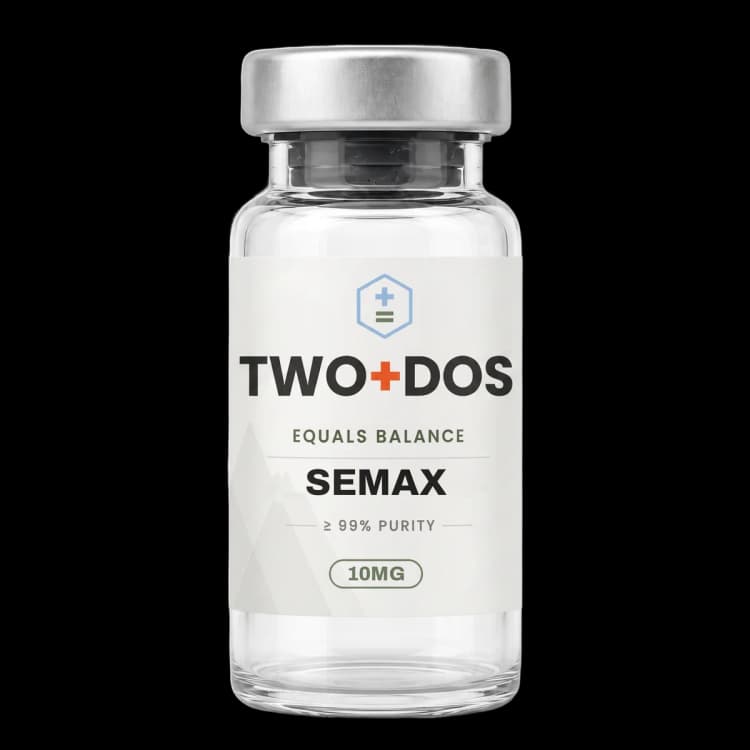
Chemical and physical properties of Semax
| Peptide class | Synthetic linear heptapeptide; the ACTH(4-7) tetrapeptide Met-Glu-His-Phe extended at the C-terminus by the glyproline Pro-Gly-Pro |
|---|---|
| Amino acid sequence | H-Met-Glu-His-Phe-Pro-Gly-Pro-OH, one-letter code MEHFPGP; seven residues, no cysteine and therefore no disulfide bridge |
| Molecular formula | C37H51N9O10S (free peptide) |
| Molecular weight | 813.9 g/mol as reported by PubChem and by chemical-catalog listings of the free peptide |
| CAS number | 80714-61-0. Some catalogs list the trifluoroacetate salt against this same registry number, so the salt form has to be read off the certificate rather than the CAS alone. |
| PubChem CID | 9811102 |
| InChIKey | AFEHBIGDWIGTEH-AQRCPPRCSA-N |
| Formal chemical name | L-methionyl-L-alpha-glutamyl-L-histidyl-L-phenylalanyl-L-prolylglycyl-L-proline |
| Reported binding constant | Dissociation constant of 2.4 plus or minus 1.0 nM at plasma membranes of rat forebrain basal nuclei, with a Bmax of 33.5 plus or minus 7.9 fmol/mg protein (Dolotov et al., 2004 and 2006) |
| Reported biodegradation | Half-life exceeding 1 hour in the presence of rat basal forebrain plasma membranes; dipeptidylaminopeptidases identified as the principal degrading enzymes |
| Reported purity and form | Supplied as a lyophilized solid; one chemical catalog specifies 95 percent or higher purity for its reference material of this CAS number |
What is Semax?
Semax is a synthetic heptapeptide with the sequence Met-Glu-His-Phe-Pro-Gly-Pro, built from the 4-7 fragment of adrenocorticotropic hormone joined to a C-terminal Pro-Gly-Pro tripeptide. The molecule carries a molecular weight of 813.9 g/mol, the formula C37H51N9O10S and CAS number 80714-61-0, and is catalogued in PubChem as CID 9811102.
The peptide originated in the Russian Academy of Sciences programme on regulatory peptides associated with Myasoedov and colleagues at the Institute of Molecular Genetics, and much of the primary literature was published in Russian-language journals such as Bioorganicheskaia khimiia and Molekuliarnaia biologiia. That publication history matters for anyone assembling a reference set, because a search restricted to English-language titles returns only part of the record. Semax holds no marketing authorization in the United States.
Structurally the molecule is simple: seven residues, a linear backbone, no cysteine and therefore no disulfide constraint, and no lipidation or PEGylation. Its distinguishing chemistry is entirely in the C-terminal glyproline, which is discussed in the next section. The consequence for laboratory work is that Semax behaves as a small, highly polar, water-tractable peptide rather than as a structured biologic.
How does the Pro-Gly-Pro extension change the parent ACTH fragment?
Semax differs from the native ACTH(4-10) sequence by substitution rather than truncation alone: the C-terminal Arg-Trp-Gly of the parent fragment is replaced with Pro-Gly-Pro. The stated design intent across the literature was to keep the neuroactive N-terminal region of the hormone while shedding the corticotropic portion, producing a peptide that acts in brain tissue without driving adrenal steroidogenesis.
The Pro-Gly-Pro tail is not inert padding. Glyprolines are themselves a studied class of regulatory peptides, and Pro-Gly-Pro has been run as a standalone comparator against Semax in rodent ischemia work, where the two produced overlapping but non-identical transcriptional profiles. Proline-flanked C-termini are also a recognised structural device for slowing exopeptidase attack, which is consistent with what the biodegradation data show.
Those degradation data come from Dolotov and colleagues in 2004, working with plasma membranes of rat forebrain basal nuclei. Dipeptidylaminopeptidases were identified as the main enzymes responsible for breakdown, and the half-life of the peptide in the presence of those membranes exceeded one hour. That figure describes a membrane preparation, not circulating persistence, and the two should not be conflated when reading vendor literature.
A structurally related comparator, ACTH(6-9)PGP, recurs throughout the Russian transcriptome work as a second-generation analogue built on the same glyproline principle from a shorter hormone fragment. Studies that run both peptides side by side are the most informative part of the corpus, because they isolate what the ACTH-derived portion contributes independently of the Pro-Gly-Pro tail.
What binding data has been published for Semax?
Semax binding was characterized by Dolotov and colleagues using tritium-labelled peptide against plasma membranes of rat forebrain basal nuclei. The reported dissociation constant was 2.4 plus or minus 1.0 nM with a maximum binding capacity of 33.5 plus or minus 7.9 fmol/mg protein. Binding was time-dependent, specific, reversible, and required calcium ions.
Two features of that result deserve emphasis. The low-nanomolar dissociation constant places the interaction in the range expected of a genuine receptor rather than non-specific membrane partitioning, and the calcium dependence is an unusual constraint that narrows the candidate site. What the work did not do is identify the binding partner molecularly. Reviews commonly discuss melanocortin receptor involvement for ACTH-derived peptides, but published affinity constants at cloned MC3R or MC4R for this specific heptapeptide are not part of the primary record, and the site labelled in the rat forebrain preparation remains formally unassigned.
Downstream of binding, the most quantified endpoint is neurotrophin expression. In rat hippocampus, a single intranasal application at 50 micrograms per kilogram produced a maximal 1.4-fold rise in BDNF protein, a 1.6-fold rise in trkB tyrosine phosphorylation, a 3-fold rise in exon III BDNF mRNA and a 2-fold rise in trkB mRNA. A companion experiment found BDNF protein elevated in basal forebrain three hours after intranasal application at 50 and 250 micrograms per kilogram, with no corresponding change in cerebellum, indicating regional rather than global engagement.
Monoamine measurements add a second axis. Eremin and colleagues reported that Semax raised striatal 5-HIAA by roughly 25 percent in tissue and roughly 180 percent in the extracellular compartment of rodents, and enhanced dopamine release when combined with D-amphetamine. The authors framed the result as a positive modulatory action on the striatal serotonergic system rather than as direct transmitter release.
What did transcriptome work report about Semax in rodent ischemia models?
Semax has been profiled more heavily by RNA sequencing than by classical pharmacology. The dominant paradigm is transient middle cerebral artery occlusion in rats, with differentially expressed genes counted in frontal cortex and subcortical structures at fixed intervals after occlusion. Four separate studies between 2020 and 2025 form a connected series using the same model and the same peptide.
The 2020 work identified 394 differentially expressed genes at greater than 1.5-fold change 24 hours after occlusion in animals receiving the peptide relative to saline, with inflammatory-process genes suppressed and neurotransmission genes activated. A 2023 study moved the sampling point to 4.5 hours and counted 131 differentially expressed genes for Semax against 322 for ACTH(6-9)PGP in dorsolateral frontal cortex, establishing that the two analogues diverge most in immune-related transcripts.
The 2024 study is the most numerically explicit. Ischemia alone produced 3,774 differentially expressed genes at 24 hours in penumbra-associated frontal cortex. Under Semax that count was 1,539, and under ACTH(6-9)PGP it was 2,066. For 1,171 genes tied to immune and neurosignaling pathways, both peptides reduced the expression distortion caused by ischemia, and only 32 genes separated the two peptides from each other at that time point. The authors also noted that the pattern of peptide action depends on how much time has elapsed since occlusion, which is why the 4.5-hour and 24-hour datasets cannot be read interchangeably.
A 2025 continuation extended the analysis to brain regions differing in the severity of ischemic damage, comparing striatum against frontal cortex, and reported that the peptides reduced ischemia-driven profile disturbance across close to two thousand genes in frontal cortex associated with neurotransmitter and inflammatory response. Protein-level work published in 2021 in the same model corroborated the transcript picture, describing upregulated active CREB in subcortical structures alongside downregulated MMP-9, c-Fos and active JNK in adjacent frontoparietal cortex.
What did 2025 studies of Semax report?
Semax attracted four distinct 2025 publications, and notably none of them repeated the ischemia transcriptome paradigm. They span electrophysiology in rat brain slices, a mouse spinal cord injury model with a molecular target assignment, a transgenic amyloid mouse line, and cell-free coordination chemistry. Together they widen the mechanistic surface considerably beyond the Russian stroke corpus.
Kolbaev, Sharonova and Skrebitsky examined intracellular calcium dynamics directly. At 1 micromolar the peptide raised the frequency of spontaneous intracellular calcium fluctuations in pyramidal-layer cells of the hippocampal CA1 field, while producing no significant effect on proton-stimulated calcium entry in cerebellar granule cells. The authors read the second result as evidence that acid-sensing ion channel attenuation is not the primary neuroprotective route, which is a useful negative finding in a literature dominated by positive associations.
Liu and colleagues, publishing in the British Journal of Pharmacology, assigned a specific molecular target. Working in female C57BL/6 mice with T9-T10 spinal cord impact injury and in PC12 cells under neuroinflammatory challenge, they reported that the peptide acts through the mu opioid receptor gene Oprm1, regulating USP18 and thereby the deubiquitination of the m6A demethylase FTO. Measured endpoints included suppressed lysosomal membrane permeabilization-linked pyroptosis and reduced oxidative stress markers.
Radchenko and colleagues, writing in Acta Naturae, worked in APPswe/PS1dE9 transgenic mice using open field, novel object recognition and Barnes maze paradigms, and reported that both the peptide and a derivative reduced the number of amyloid inclusions in cortex and hippocampus alongside changes in the behavioural measures. Separately, Tomasello and colleagues characterized the molecule as a copper chelator: it extracted Cu(II) from Cu(II)-amyloid-beta species, altered the redox cycling of the complex, lowered associated reactive oxygen species production, and protected SH-SY5Y cells against oxidative challenge. That copper work follows a 2022 study in which the peptide reduced fibril formation in artificial membrane models specifically under copper-containing conditions.
What identity and naming issues surround Semax?
Semax appears in the literature under at least four designations, and a reference search on the trade name alone will return an incomplete set. The peptide is written as Semax, as ACTH(4-7)PGP, as an ACTH(4-10) analogue, and by its one-letter sequence MEHFPGP. Russian-language primary papers frequently use the bracketed fragment notation rather than the name.
Salt form is the second issue. Catalog listings for CAS 80714-61-0 include both the free peptide and a trifluoroacetate salt, and the two differ in formula weight and in residual counter-ion content even though vendors index them against the same registry number. Documentation that records only the CAS number therefore under-specifies the material, and a certificate of analysis naming the salt is the item worth retaining.
A third distinction is the comparator peptides that appear alongside Semax in the same papers. Pro-Gly-Pro on its own and ACTH(6-9)PGP are separate chemical entities with their own transcriptional signatures, and findings reported for those molecules are regularly cited loosely as though they applied to the heptapeptide. When reading secondary summaries, checking which of the three peptides an experiment actually used resolves a large share of apparent contradictions in the record.
Summary of published research
Findings below are reported as published by the cited authors, in the model systems they used. They describe laboratory research, and none of them characterize use in humans.
Kolbaev SN, Sharonova IN, Skrebitsky VG. The Effect of Peptide Semax, an ACTH(4-10) Analogue, on Intracellular Calcium Dynamics in Rat Brain Neurons. Bulletin of Experimental Biology and Medicine (2025)
- Model system
- Rodent; acute rat brain slices and dissociated cerebellar granule cells with calcium imaging
- Conditions
- Peptide applied at 1 micromolar; spontaneous intracellular calcium fluctuations recorded in hippocampal CA1 pyramidal layer, and proton-stimulated calcium entry recorded in cerebellar granule cells
- Reported finding
- The peptide increased the frequency of spontaneous intracellular calcium fluctuations in CA1 pyramidal-layer cells. No significant effect was measured on proton-stimulated calcium entry in cerebellar granule cells, which the authors interpreted as evidence that acid-sensing ion channel attenuation is not the principal neuroprotective mechanism.
Liu R, Chen Y, Huang H, Li X, Lv J, Jiang L, Jiang H, Wu C, Chen W, Xu H, Zhu Z, Cai H, Xiao J, Yin L, Ni W. Semax peptide targets the μ opioid receptor gene Oprm1 to promote deubiquitination and functional recovery after spinal cord injury in female mice. British Journal of Pharmacology (2025)
- Model system
- Rodent and cell line; female C57BL/6 mice with T9-T10 spinal cord impact injury, plus PC12 cells under neuroinflammatory challenge
- Conditions
- Contusion model with locomotor scoring and molecular readouts; PC12 cultures used for target validation of Oprm1, USP18 and the m6A demethylase FTO
- Reported finding
- Action was attributed to the mu opioid receptor gene Oprm1, with regulation of USP18 and downstream deubiquitination of FTO. Lysosomal membrane permeabilization-linked pyroptosis was suppressed and oxidative stress markers decreased in both the animal model and the cell cultures.
Radchenko AI, Kuzubova EV, Apostol AA, Mitkevich VA, Andreeva LA, Limborska SA, Stepenko YV, Shmigerova VS, Solin AV, Korokin MV, Pokrovskii MV, Myasoedov NF, Makarov AA. The Potential of the Peptide Drug Semax and Its Derivative for Correcting Pathological Impairments in the Animal Model of Alzheimer's Disease. Acta Naturae (2025)
- Model system
- Rodent; APPswe/PS1dE9 transgenic mice
- Conditions
- Open field, novel object recognition and Barnes maze paradigms, followed by histological quantification of amyloid inclusions in cortex and hippocampus
- Reported finding
- Both the peptide and its derivative altered the behavioural measures relative to untreated transgenic controls and reduced the number of amyloid inclusions counted in cortex and hippocampus.
Tomasello MF, Di Rosa MC, Naletova I, Sciacca MFM, Giuffrida A, Maccarrone G, Attanasio F. Semax, a Copper Chelator Peptide, Decreases the Cu(II)-Catalyzed ROS Production and Cytotoxicity of aβ by Metal Ion Stripping and Redox Silencing. Bioinorganic Chemistry and Applications (2025)
- Model system
- Cell-free coordination chemistry with SH-SY5Y neuroblastoma cell assays
- Conditions
- Cu(II)-amyloid-beta complexes characterized spectroscopically; reactive oxygen species production and cytoprotection measured against copper-driven oxidative challenge
- Reported finding
- The peptide extracted Cu(II) from Cu(II)-amyloid-beta species, altered redox cycling of the complex and lowered associated reactive oxygen species production. SH-SY5Y cells were protected against copper-catalysed oxidative challenge.
Filippenkov IB, Shpetko YY, Ales DA, Stavchansky VV, Denisova AE, Yuzhakov VV, Fomina NK, Gubsky LV, Andreeva LA, Myasoedov NF, Limborska SA, Dergunova LV. Genes That Associated with Action of ACTH-like Peptides with Neuroprotective Potential in Rat Brain Regions with Different Degrees of Ischemic Damage. International Journal of Molecular Sciences (2025)
- Model system
- Rodent; transient middle cerebral artery occlusion in rats, RNA sequencing
- Conditions
- Striatum compared against frontal cortex to contrast regions of differing ischemic severity, with ACTH(6-9)PGP as a parallel comparator peptide
- Reported finding
- The peptides reduced ischemia-driven expression disturbance across close to two thousand differentially expressed genes in frontal cortex, concentrated in neurotransmitter and inflammatory response categories, with the effect differing by region of damage severity.
Filippenkov IB, Shpetko YY, Stavchansky VV, Denisova AE, Gubsky LV, Andreeva LA, Myasoedov NF, Limborska SA, Dergunova LV. ACTH-like Peptides Compensate Rat Brain Gene Expression Profile Disrupted by Ischemia a Day After Experimental Stroke. Biomedicines (2024)
- Model system
- Rodent; transient middle cerebral artery occlusion in rats, RNA sequencing of penumbra-associated frontal cortex
- Conditions
- Sampling at 24 hours after occlusion; threshold of fold change greater than 1.5 with adjusted P below 0.05; Semax compared against ACTH(6-9)PGP
- Reported finding
- Ischemia alone produced 3,774 differentially expressed genes. Under Semax the count was 1,539 and under ACTH(6-9)PGP it was 2,066. For 1,171 genes linked to immune and neurosignaling pathways both peptides reduced the ischemia-driven distortion, and only 32 genes separated the two peptides at that time point.
Inozemtseva LS, Yatsenko KA, Glazova NY, Kamensky AA, Myasoedov NF, Levitskaya NG, Grivennikov IA, Dolotov OV. Antidepressant-like and antistress effects of the ACTH(4-10) synthetic analogs Semax and Melanotan II on male rats in a model of chronic unpredictable stress. European Journal of Pharmacology (2024)
- Model system
- Rodent; male rats under a chronic unpredictable stress paradigm
- Conditions
- Peptide given at 60 nmol/kg, with Melanotan II as a melanocortin comparator; endpoints included sucrose preference, adrenal morphometry, circulating corticosterone and hippocampal BDNF
- Reported finding
- Stress-induced loss of sucrose preference was reversed, adrenal hypertrophy was reduced and corticosterone concentrations fell. Hippocampal BDNF, which had declined under chronic stress, was restored in the peptide-exposed groups.
Filippenkov IB, Remizova JA, Stavchansky VV, Denisova AE, Gubsky LV, Myasoedov NF, Limborska SA, Dergunova LV. Synthetic Adrenocorticotropic Peptides Modulate the Expression Pattern of Immune Genes in Rat Brain following the Early Post-Stroke Period. Genes (2023)
- Model system
- Rodent; transient middle cerebral artery occlusion in rats, RNA sequencing of dorsolateral frontal cortex
- Conditions
- Sampling at 4.5 hours after occlusion, inside the early post-occlusion interval; Semax compared against ACTH(6-9)PGP
- Reported finding
- 131 differentially expressed genes were counted for Semax and 322 for ACTH(6-9)PGP. Both peptides partly offset the ischemia-driven disturbance of immune and neurosignaling expression profiles, while differing from each other predominantly in immune-related genes.
Dolotov OV, Karpenko EA, Seredenina TS, Inozemtseva LS, Levitskaya NG, Zolotarev YA, Kamensky AA, Grivennikov IA, Engele J, Myasoedov NF. Semax, an analogue of adrenocorticotropin (4-10), binds specifically and increases levels of brain-derived neurotrophic factor protein in rat basal forebrain. Journal of Neurochemistry (2006)
- Model system
- Rodent; radioligand binding to rat basal forebrain membranes with in vivo protein measurement
- Conditions
- Tritium-labelled peptide binding assays; intranasal application at 50 and 250 micrograms per kilogram with BDNF protein measured at 3 hours in basal forebrain and cerebellum
- Reported finding
- Binding was specific, reversible, time-dependent and calcium-dependent, with a dissociation constant of 2.4 plus or minus 1.0 nM. BDNF protein rose in basal forebrain but not in cerebellum, indicating a regionally restricted response.
Dolotov OV, Karpenko EA, Inozemtseva LS, Seredenina TS, Levitskaya NG, Rozyczka J, Dubynina EV, Novosadova EV, Andreeva LA, Alfeeva LY, Kamensky AA, Grivennikov IA, Myasoedov NF, Engele J. Semax, an analog of ACTH(4-10) with cognitive effects, regulates BDNF and trkB expression in the rat hippocampus. Brain Research (2006)
- Model system
- Rodent; rat hippocampus after single intranasal application
- Conditions
- Single application at 50 micrograms per kilogram; BDNF protein, trkB tyrosine phosphorylation, exon III BDNF mRNA and trkB mRNA quantified, with conditioned avoidance responding scored
- Reported finding
- Maximal increases of 1.4-fold in BDNF protein, 1.6-fold in trkB tyrosine phosphorylation, 3-fold in exon III BDNF mRNA and 2-fold in trkB mRNA were measured in hippocampus, alongside an increase in the number of conditioned avoidance reactions.
Eremin KO, Kudrin VS, Saransaari P, Oja SS, Grivennikov IA, Myasoedov NF, Rayevsky KS. Semax, an ACTH(4-10) analogue with nootropic properties, activates dopaminergic and serotoninergic brain systems in rodents. Neurochemical Research (2005)
- Model system
- Rodent; rat striatum, tissue measurement with in vivo microdialysis
- Conditions
- Monoamine and metabolite quantification in striatal tissue and extracellular fluid, including a combination arm with D-amphetamine
- Reported finding
- Striatal 5-HIAA rose by approximately 25 percent in tissue and approximately 180 percent in the extracellular compartment, and dopamine release was enhanced when the peptide was combined with D-amphetamine. The authors described a positive modulatory action on the striatal serotonergic system.
Dolotov OV, Zolotarev YA, Dorokhova EM, Andreeva LA, Alfeeva LY, Grivennikov IA, Myasoedov NF. The binding of Semax, ACTH 4-10 heptapeptide, to plasma membranes of the rat forebrain basal nuclei and its biodegradation. Bioorganicheskaia khimiia (Russian Journal of Bioorganic Chemistry) (2004)
- Model system
- Cell-free; plasma membrane preparation from rat forebrain basal nuclei
- Conditions
- Radioligand binding kinetics and enzymatic degradation profiling against membrane preparations
- Reported finding
- Binding was time-dependent, specific and reversible, with a dissociation constant of 2.41 plus or minus 1.02 times ten to the minus nine molar and a Bmax of 33.5 plus or minus 7.9 fmol/mg protein. Dipeptidylaminopeptidases were identified as the principal degrading enzymes, and the half-life in the presence of the membranes exceeded one hour.
Mavrych V, Shypilova I, Bolgova O. Therapeutic Peptides in Gerontology: Mechanisms and Applications for Healthy Aging. Frontiers in Aging (2026)
- Model system
- Review
- Conditions
- Narrative review across nine peptides spanning distinct mechanistic categories
- Reported finding
- The review placed this heptapeptide among neuroactive peptides characterized largely in preclinical systems, and recorded that non-approved peptides in the set rest on limited clinical evidence and lack long-term human data and systematic validation.
What laboratory handling information is published?
Semax handling figures come from chemical-catalog specifications rather than from peer-reviewed measurement, and should be read as vendor specifications. One catalog listing for CAS 80714-61-0 specifies purity of 95 percent or higher, storage of the solid at minus 20 degrees Celsius, and solubility of 1 mg/mL in dimethylformamide, 5 mg/mL in dimethyl sulfoxide and 10 mg/mL in phosphate-buffered saline at pH 7.2.
The peer-reviewed number most relevant to bench work is the biodegradation result. Against rat forebrain basal nuclei plasma membranes the peptide showed a half-life exceeding one hour, with dipeptidylaminopeptidases identified as the principal degrading enzymes. That is a membrane-preparation figure and describes enzymatic susceptibility in that system only; it is not a circulating half-life, and secondary sources frequently blur the two.
Because the sequence carries an N-terminal methionine, oxidation of the thioether sulfur is the identity-relevant degradation route to watch analytically, and it shifts molecular weight in a way reversed-phase HPLC coupled to mass spectrometry will resolve. The peptide has no cysteine, so disulfide scrambling, which complicates handling of many research peptides, does not apply here. Purity and identity are conventionally established by reversed-phase HPLC with mass-spectrometric confirmation against the 813.9 g/mol free-peptide value.
One documentation point recurs. Catalogs index both the free peptide and the trifluoroacetate salt against the same CAS number, and the two differ in measured formula weight. Recording the salt form from the certificate of analysis, rather than inferring it from the registry number, is what keeps gravimetric records internally consistent across lots.
Frequently asked research questions
What is the amino acid sequence of Semax?
Met-Glu-His-Phe-Pro-Gly-Pro, written MEHFPGP in one-letter code. The first four residues correspond to positions 4 through 7 of adrenocorticotropic hormone, and the C-terminal Pro-Gly-Pro replaces the Arg-Trp-Gly found at the end of the native ACTH(4-10) fragment.
What molecular identity values are reported for Semax?
The formula is C37H51N9O10S with a molecular weight of 813.9 g/mol, CAS number 80714-61-0, PubChem CID 9811102 and InChIKey AFEHBIGDWIGTEH-AQRCPPRCSA-N. The formal chemical name is L-methionyl-L-alpha-glutamyl-L-histidyl-L-phenylalanyl-L-prolylglycyl-L-proline.
What binding affinity has been measured for Semax?
A dissociation constant of 2.4 plus or minus 1.0 nM was measured against plasma membranes of rat forebrain basal nuclei, with a maximum binding capacity of 33.5 plus or minus 7.9 fmol/mg protein. Binding was specific, reversible and calcium-dependent. The molecular identity of that binding site was not established in the work.
Which model systems dominate the Semax literature?
Rodent transient middle cerebral artery occlusion with RNA-sequencing readout accounts for the largest share, spanning studies from 2020 through 2025. Rat hippocampal neurotrophin measurement forms a second cluster, and 2025 work added rat brain slice calcium imaging, a mouse spinal cord injury model, transgenic amyloid mice and cell-free copper coordination chemistry.
How does Semax differ from ACTH(6-9)PGP and from Pro-Gly-Pro?
All three are distinct chemical entities that appear together in the same rodent studies. Semax is ACTH(4-7) extended with Pro-Gly-Pro; ACTH(6-9)PGP is built from a different hormone fragment on the same glyproline principle; and Pro-Gly-Pro is the standalone tripeptide. Their transcriptional signatures overlap but are not identical, so findings are not interchangeable between them.
Semax at TWO+DOS
TWO+DOS supplies Semax as a research-use-only compound, third-party tested, with certificates of analysis emailed immediately on request.
View the Semax (10mg)listing →Related research overviews
References
- PubChem CID 9811102: formula, molecular weight, InChIKey and CAS
- Kolbaev et al. 2025, Bulletin of Experimental Biology and Medicine (PMID 41171324)
- Liu et al. 2025, British Journal of Pharmacology (PMID 40692165)
- Radchenko et al. 2025, Acta Naturae (PMID 41479572)
- Tomasello et al. 2025, Bioinorganic Chemistry and Applications (PMID 40496623)
- Filippenkov et al. 2025, International Journal of Molecular Sciences (PMID 40650034)
- Filippenkov et al. 2024, Biomedicines (PMID 39767736)
- Inozemtseva et al. 2024, European Journal of Pharmacology (PMID 39442746)
- Filippenkov et al. 2023, Genes (PMID 37510287)
- Dergunova et al. 2023, Genes: neuroprotective peptide review (PMID 37239313)
- Dolotov et al. 2006, Journal of Neurochemistry: binding constant (PMID 16635254)
- Dolotov et al. 2004, Russian Journal of Bioorganic Chemistry: biodegradation (PMID 15344653)
- Mavrych et al. 2026, Frontiers in Aging (PMID 42021992)
For research use only. Not for human or veterinary use. Not for diagnostic or therapeutic use.