
GHRP-6: Hexapeptide Chemistry, Receptor Structure and Published Data
By the TWO+DOS Research Team · Published 2026-08-13
For research use only. Not for human or veterinary use. Not for diagnostic or therapeutic use.
GHRP-6 is a synthetic hexapeptide with the sequence His-D-Trp-Ala-Trp-D-Phe-Lys-NH2, a molecular formula of C46H56N12O6 and a molecular weight of 873.0 g/mol. It acts as a full agonist at the growth hormone secretagogue receptor 1a, the G protein-coupled receptor whose endogenous ligand is acyl-ghrelin.
The published record spans four decades and two largely separate research programmes. One runs from the 1984 pituitary characterization through receptor cloning in 1996 to a 3.2 angstrom cryo-electron microscopy structure in 2021. The other, centred on the Cuban Center for Genetic Engineering and Biotechnology, has examined the molecule under the development code CIGB-500 across cardiac, renal, pulmonary and cerebral ischaemia models, reaching a phase III readout in 2026. Each finding below is reported in the species and preparation where it was measured.
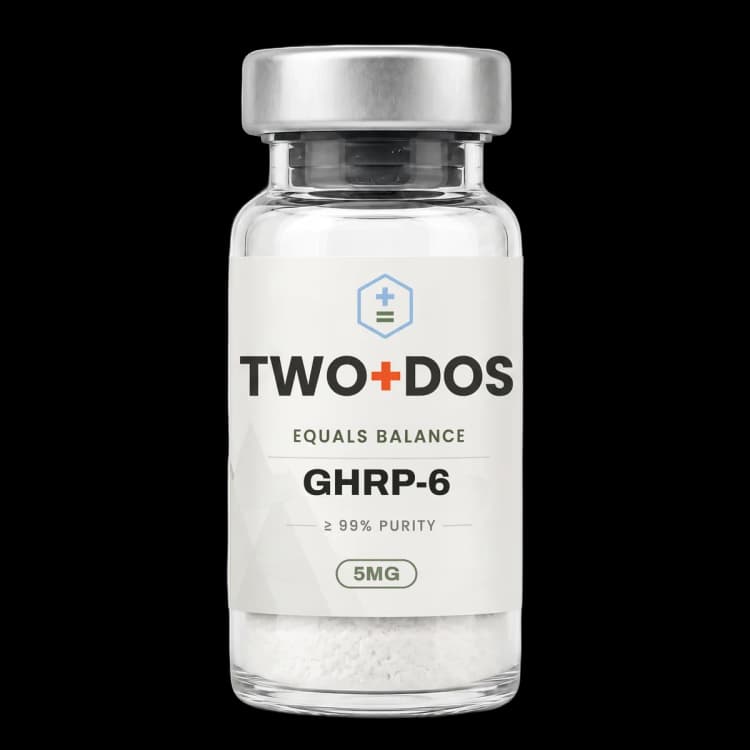
Chemical and physical properties of GHRP-6
| Peptide class | Synthetic C-terminally amidated hexapeptide; full agonist at the growth hormone secretagogue receptor 1a |
|---|---|
| Sequence | His-D-Trp-Ala-Trp-D-Phe-Lys-NH2 (six residues, amidated at the C-terminus) |
| Molecular formula | C46H56N12O6 (free peptide); commonly supplied as the acetate salt, which adds a variable acetate counter-ion. |
| Molecular weight | 873.0 g/mol; exact and monoisotopic mass 872.4446 Da |
| CAS number | 87616-84-0 (free peptide) |
| PubChem CID | 9919153 |
| Registry identifiers | InChIKey WZHKXNSOCOQYQX-FUAFALNISA-N; UNII 4H7N4I6X6A; ChEMBL CHEMBL105462; DTXSID30904007 |
| Non-proteinogenic features | D-tryptophan at position 2 and D-phenylalanine at position 5; C-terminal amide in place of a free acid |
| Computed descriptors | XLogP 1.9; topological polar surface area 301 square angstroms; 11 hydrogen-bond donors; 9 acceptors; 23 rotatable bonds; 64 heavy atoms (PubChem computed) |
| Reported receptor potency | IUPHAR/BPS Guide to PHARMACOLOGY lists a full agonist profile: pEC50 8.3 to 9.1 at the human receptor, pKi 8.8 at the rat receptor |
| Structural data | PDB 7F9Z: hexapeptide bound to the ghrelin receptor with Gq, cryo-electron microscopy at 3.2 angstroms |
What is GHRP-6?
GHRP-6 is the hexapeptide His-D-Trp-Ala-Trp-D-Phe-Lys-NH2, described by Bowers and colleagues in 1984 and also indexed as SK&F 110679, U-75799E and [His1, Lys6]-GHRP. Its formula is C46H56N12O6, its molecular weight 873.0 g/mol and its monoisotopic mass 872.4446 Da, under CAS number 87616-84-0 and PubChem CID 9919153.
Two of the six positions carry D-configured residues, D-tryptophan at position 2 and D-phenylalanine at position 5, and the C-terminus is an amide rather than a free acid. Those departures from ordinary L-peptide chemistry are what let the molecule survive exopeptidase exposure long enough to be measured in circulation. The two indole side chains contributed by tryptophan at positions 2 and 4 dominate the ultraviolet absorbance profile and push the computed polar surface area to 301 square angstroms across 23 rotatable bonds.
The molecule has a documented origin in opioid peptide chemistry. Bowers and Momany derived the growth hormone releasing peptide series from met-enkephalin analogues that had lost opioid activity while retaining secretagogue activity at the pituitary. GHRP-6 therefore existed as a defined pharmacological tool for fifteen years before its endogenous counterpart was known: the receptor was cloned in 1996 and ghrelin isolated in 1999. That ordering is why older literature names the receptor after the synthetic class rather than the natural hormone.
How does GHRP-6 bind and activate the ghrelin receptor?
GHRP-6 binds the growth hormone secretagogue receptor 1a, a class A G protein-coupled receptor. Wang and colleagues resolved that complex by cryo-electron microscopy in 2021 at 3.2 angstroms with a Gq heterotrimer, deposited as PDB 7F9Z, alongside a companion ghrelin-bound structure at 2.9 angstroms deposited as 7F9Y.
The pocket contacting the hexapeptide is lined by F279 (6.51), F309 (7.39), F312 (7.42) and Y313 (7.43), an aromatic cluster that accommodates the two indole rings and the D-phenylalanine. R283 (6.55) forms a cation-pi interaction with D-Phe5. Read as a pair, the two structures show a six-residue synthetic ligand and a 28-residue acylated hormone converging on overlapping receptor contacts.
What separates them is a second cavity. Ghrelin carries an octanoyl group on Ser3, and five of that fatty acid's eight carbons occupy a hydrophobic sub-pocket formed with F286 (6.58), I178 (4.60) and L181 (4.63). GHRP-6 has no acyl chain and leaves that cavity empty, yet still activates the receptor. The pair therefore separates contacts required for activation from those the hormone adds through its lipid modification.
Reported potency places the hexapeptide in the low nanomolar range. The IUPHAR/BPS Guide to PHARMACOLOGY entry for this receptor lists GHRP-6 as a full agonist with pEC50 values of 8.3 to 9.1 at the human receptor in calcium release and inositol phosphate accumulation assays, a pKi of 8.8 at the rat receptor, and a wider pKd span of 6.6 to 8.8 across binding preparations that reflects assay format rather than disagreement about the target.
What did the original characterization of GHRP-6 establish?
GHRP-6 was characterized by Bowers, Momany, Reynolds and Hong in 1984 as a hexapeptide acting on the pituitary to release growth hormone without concurrent release of LH, FSH, TSH or prolactin. Minimum active concentrations in the pituitary incubate assay ran from 1 to 10 ng/mL, and growth hormone rose within 2 minutes in vivo, peaking at 10 to 20 minutes.
That first report spanned rats, monkeys, lambs and calves, an unusually wide species panel for an initial characterization, and the response held across all of them. Repeated exposure over 9 or 25 days in immature rats left pituitary responsiveness intact, indicating the somatotrope did not desensitize across that window.
The receptor itself stayed unidentified for twelve more years. Howard and colleagues reported in Science in 1996 the cloning of a G protein-coupled receptor from the pituitary and from the arcuate ventromedial and infundibular hypothalamus of swine and humans, and showed it was the target of this secretagogue class. That result converted a phenomenological pituitary assay into a defined molecular target, and the search it opened produced ghrelin three years later.
What has GHRP-6 shown in organ injury models?
GHRP-6 has been examined across ischaemic and toxic organ injury models, largely by groups working under the development code CIGB-500. Reported endpoints are structural and molecular rather than behavioural: interstitial fibrosis, left ventricular systolic function, alveolar-capillary permeability, tubular epithelial cell survival and proteomic pathway shifts.
In a rat permanent left descending coronary artery ligation model reported in 2026, animals given the hexapeptide across 7 days after surgery showed attenuated myocardial tissue demise, reduced interstitial fibrosis and scarring, and improved left ventricle physiology against saline controls. Proteomic profiling attributed the separation to upregulated fatty acid beta-oxidation, anti-apoptotic pathways, antioxidant defences and mitochondrial metabolic reprogramming.
Three further reports extend the pattern beyond the infarct model. An earlier rat study paired the hexapeptide with doxorubicin and recorded preserved myocardial fibres, retained systolic function and upregulation of the pro-survival gene Bcl-2. In lipopolysaccharide and zymosan lung injury models in mice, it reduced neutrophilic alveolitis and lowered serum interleukin-1 beta at 24 hours. A self-assembling GHRP-6 hydrogel in acute kidney injury enriched spermidine, L-glutamine and acetyl-CoA on metabolomic sequencing and sustained tubular epithelial cell survival through the mTOR-P70 pathway.
What pharmacokinetic and analytical values are published for GHRP-6?
GHRP-6 has one published human pharmacokinetic dataset. Cabrales and colleagues studied nine male volunteers in 2013 at three exposure levels of 100, 200 and 400 µg/kg, and reported bi-exponential disposition fitting with R squared above 0.99, a distribution half-life of 7.6 ± 1.9 minutes and an elimination half-life of 2.5 ± 1.1 hours.
Quantification ran down to a lower limit of 5 ng/mL, reached by 12 hours and capturing more than 85 percent of the area under the curve. Four of the nine volunteers showed atypical concentration spikes during elimination, an irregularity the authors recorded rather than resolved.
Analytical laboratories handle the hexapeptide as one of a small family that has to be told apart from close relatives. González-López and colleagues reported in 2023 that GHRP-6, GHRP-4 and sermorelin (22-29) were stable to enzymatic and blood challenge and could serve as in-house internal standards for quantifying this peptide class in biological matrices. Stability under those conditions is what qualifies a compound as a reference rather than an analyte.
Repeat-exposure toxicology exists in a non-rodent species. A 28-day beagle dog study published in 2025 under the CIGB-500 designation set the no observable adverse effect level at 2000 µg/kg per day, the highest level tested.
What has GHRP-6 shown in human and non-mammalian studies?
GHRP-6 reached a phase III readout in 2026 as one half of a two-component combination. The COURAGE-2 trial paired 75 µg of epidermal growth factor with 5 mg of the hexapeptide twice daily across 7 days in acute ischaemic stroke, enrolling 188 participants within 12 hours of symptom onset and comparing against standard care.
The trial missed its primary endpoint, with no differences in modified Rankin Scale score, Barthel Index or survival across the whole randomized cohort. A severe-stroke subgroup of 27 separated from controls, and the authors described that signal as warranting further study rather than as a conclusion.
Human in vitro work exists on a much smaller scale. Ostadian and colleagues cultured 240 human germinal vesicle oocytes across a concentration range in 2025 and identified 75 ng/mL as the most effective, giving maturation rates of 70 percent on the first day and 80 percent on the second. Gene expression analysis on a further 164 oocytes indicated nucleonic maturation without a matching shift in cytoplasmic maturation markers at 24 hours.
Non-mammalian work supplies an independent line. Rodríguez-Viera and colleagues delivered 500 µg/kg of the hexapeptide through aquafeeds to gilthead sea bream and reported stable plasma lactate, triglycerides and cortisol after an incomplete Freund's adjuvant challenge, where controls shifted. Transcriptomics showed il10, il15, il34 and mx1 raised in anterior intestine and il8, il10 and ighm in spleen, without histological damage.
Summary of published research
Findings below are reported as published by the cited authors, in the model systems they used. They describe laboratory research, and none of them characterize use in humans.
Bowers CY, Momany FA, Reynolds GA, Hong A. On the in vitro and in vivo activity of a new synthetic hexapeptide that acts on the pituitary to specifically release growth hormone. Endocrinology (1984)
- Model system
- Rat pituitary incubate assay, plus in vivo work in rats, monkeys, lambs and calves
- Conditions
- Pituitary incubate assay with a hormone panel covering LH, FSH, TSH and prolactin, plus repeated exposure over 9 or 25 days in immature rats
- Reported finding
- Minimum active concentrations were 1 to 10 ng/mL in the pituitary incubate assay, with no concurrent release of LH, FSH, TSH or prolactin. Growth hormone rose within 2 minutes and peaked at 10 to 20 minutes, and pituitary responsiveness was retained after repeated exposure.
Howard AD, Feighner SD, Cully DF, Arena JP, Liberator PA, Rosenblum CI, et al. A receptor in pituitary and hypothalamus that functions in growth hormone release. Science (1996)
- Model system
- Cloning and expression work using swine and human pituitary and hypothalamic tissue
- Conditions
- Molecular cloning of the receptor target of the growth hormone secretagogue class, with expression mapped across pituitary and hypothalamus
- Reported finding
- A G protein-coupled receptor of the pituitary and of the arcuate ventromedial and infundibular hypothalamus of swine and humans was cloned and shown to be the target of the growth hormone secretagogues, giving the hexapeptide class a defined molecular target twelve years after the peptide was described.
Cabrales A, Gil J, Fernández E, Valenzuela C, Hernández F, García I, et al. Pharmacokinetic study of Growth Hormone-Releasing Peptide 6 (GHRP-6) in nine male healthy volunteers. European Journal of Pharmaceutical Sciences (2013)
- Model system
- Nine healthy male human volunteers
- Conditions
- Three exposure levels of 100, 200 and 400 µg/kg, with plasma concentrations fitted to a bi-exponential disposition model and quantification down to 5 ng/mL
- Reported finding
- Distribution half-life was 7.6 ± 1.9 minutes and elimination half-life 2.5 ± 1.1 hours, with fits above R squared 0.99. The 5 ng/mL quantification limit was reached by 12 hours, capturing over 85 percent of the area under the curve. Four of the nine volunteers showed atypical concentration spikes during elimination.
Wang Y, Guo S, Zhuang Y, Yun Y, Xu P, He X, Guo J, Yin W, Xu HE, Xie X, Jiang Y. Molecular recognition of an acyl-peptide hormone and activation of ghrelin receptor. Nature Communications (2021)
- Model system
- Cell-free cryo-electron microscopy of purified ghrelin receptor-Gq complexes
- Conditions
- Two structures: the hexapeptide-bound complex at 3.2 angstroms (PDB 7F9Z) and the ghrelin-bound complex at 2.9 angstroms (PDB 7F9Y)
- Reported finding
- GHRP-6 occupied a pocket lined by F279 (6.51), F309 (7.39), F312 (7.42) and Y313 (7.43), with R283 (6.55) forming a cation-pi interaction with D-Phe5. Ghrelin additionally filled a second cavity with five of the eight carbons of its octanoyl group, contacting F286 (6.58), I178 (4.60) and L181 (4.63), a cavity the hexapeptide leaves empty while still activating the receptor.
González-López NM, Guerra-Acero-Turizo LM, Blanco-Medina I, Barragán-Cárdenas AC, Ramírez-Celis DA, Martínez-Ramírez JA, et al. In-house standards derived from doping peptides: Enzymatic and serum stability and degradation profile of GHRP and GHRH-related peptides. Biomedical Chromatography (2023)
- Model system
- In vitro enzymatic and whole-blood stability testing with chromatographic profiling
- Conditions
- A panel of GHRP- and GHRH-related peptides exposed to enzyme and blood challenge, degradation products profiled chromatographically
- Reported finding
- GHRP-6, GHRP-4 and sermorelin (22-29) remained stable to both challenges, and the authors concluded they can serve as in-house internal standards for quantifying peptides of this class in biological samples.
Berlanga-Acosta J, Cibrian D, Valiente-Mustelier J, Suárez-Alba J, García-Ojalvo A, Falcón-Cama V, Jiang B, Wang L, Guillén-Nieto G. Growth hormone releasing peptide-6 (GHRP-6) prevents doxorubicin-induced myocardial and extra-myocardial damages by activating prosurvival mechanisms. Frontiers in Pharmacology (2024)
- Model system
- Rat model of doxorubicin cardiotoxicity
- Conditions
- The hexapeptide run in parallel with doxorubicin; endpoints were left ventricular function, myocardial histology, antioxidant markers, Bcl-2 expression and extracardiac organ histology
- Reported finding
- Myocardial fibres and left ventricular systolic function were preserved without ventricular dilation, antioxidant defence was sustained, the pro-survival gene Bcl-2 was upregulated and cardiomyocyte mitochondrial integrity retained. Epithelial organs outside the heart were similarly preserved.
Castro J, Shaikh I, Silo S, Hum C, Carrier M, DiFruscia R, Thouin F, Chan J, Aldana L, Garcia A, Berlanga J, Berryman L. Subchronic safety assessment of CIGB-500 in beagle dog after repeated daily dose administration over 28 days. Regulatory Toxicology and Pharmacology (2025)
- Model system
- Beagle dog, 28-day repeat-exposure toxicology
- Conditions
- Four groups over 28 days: control, 300, 1000 and 2000 µg/kg per day of CIGB-500, whose active ingredient is GHRP-6
- Reported finding
- Transient hypersalivation and reduced heart rate appeared at the higher exposure levels and reversed. All findings were classed as non-adverse and reversible, and the no observable adverse effect level was set at 2000 µg/kg per day.
Ostadian C, Hayati N, Zahiri Sorouri Z, Hosseini A. Assessing The Effectiveness of Growth Hormone Releasing Protein-6 in Improving Human Oocyte Maturation and Meiotic Progression in In Vitro Maturation Culture Media. International Journal of Fertility and Sterility (2025)
- Model system
- Human germinal vesicle oocytes in in vitro maturation culture
- Conditions
- 240 oocytes cultured across a range of GHRP-6 concentrations, plus gene expression analysis on a further 164 oocytes at 24 hours
- Reported finding
- A concentration of 75 ng/mL was the most effective tested, giving maturation rates of 70 percent on the first day and 80 percent on the second. Gene expression indicated nucleonic maturation without a corresponding change in cytoplasmic maturation markers at 24 hours.
Rodríguez-Viera L, Caderno A, Martinez R, Martinez-Rodríguez G, Oliva M, Perera E, Mancera JM, Martos-Sitcha JA. The Ghrelin Analog GHRP-6, Delivered Through Aquafeeds, Modulates the Endocrine and Immune Responses of Sparus aurata Following IFA Treatment. Biology (2025)
- Model system
- Gilthead sea bream, Sparus aurata
- Conditions
- 500 µg/kg of the hexapeptide delivered through aquafeeds, then an incomplete Freund's adjuvant challenge; plasma metabolites, tissue transcriptomics and histology as endpoints
- Reported finding
- Fish receiving the peptide held stable plasma lactate, triglycerides and cortisol after the challenge, where controls shifted. Anterior intestine showed upregulation of il10, il15, il34 and mx1, and spleen raised il8, il10 and ighm, with no histological damage.
Zhao X, Pan K, Li R, Liu M, Li D, Jia P, Han Z, Han ZC, Guo Z, Li Z, Li Q. Growth hormone-releasing peptide 6 (GHRP-6) hydrogel for acute kidney injury therapy via metabolic regulation. Journal of Nanobiotechnology (2025)
- Model system
- Rodent acute kidney injury model with a self-assembling peptide hydrogel formulation
- Conditions
- GHRP-6 formulated as a self-assembling hydrogel, read out by metabolomic sequencing and tubular epithelial cell survival in an ischaemic microenvironment
- Reported finding
- Spermidine, L-glutamine and acetyl-CoA, all involved in amino acid and fatty acid metabolism, were highly enriched in the hydrogel group. Tubular epithelial cell survival was sustained through activation of the mTOR-P70 pathway.
Wang L, Rodriguez-Ulloa A, Berlanga-Acosta J, García-Ojalvo A, Abreu-Cruz A, Gonzalez-López LJ, Besada-López V, Ramos-Gómez Y, Guillén-Nieto G, Jiang B. Growth Hormone-Releasing Peptide-6 (GHRP-6) Ameliorates Post-Infarct Ventricular Remodeling and Systolic Dysfunction in a Model of Permanent Coronary Ligation. Pharmaceuticals (2026)
- Model system
- Rat model of myocardial infarction by permanent left descending coronary artery ligation
- Conditions
- Three groups over 7 days after surgery: sham controls, infarcted saline controls and infarcted animals given GHRP-6, with myocardial proteomic profiling
- Reported finding
- The peptide group showed attenuated myocardial tissue demise, reduced interstitial fibrosis and scarring, and improved left ventricle physiology. Proteomics linked the separation to upregulated fatty acid beta-oxidation, anti-apoptotic pathways, antioxidant defences and mitochondrial metabolic reprogramming.
Hernández-Bernal F, Subirós-Martínez N, Gutiérrez-Ronquillo JH, Colina-Ávila E, Guevara-Rodríguez M, Estenoz-García D, et al. Phase III Open-Label, Randomized Clinical Trial of Epidermal Growth Factor and Growth Hormone Releasing Hexapeptide in Acute Ischemic Stroke. Journal of Clinical Neuroscience (2026)
- Model system
- Multicentre, randomized, open-label phase III human trial (COURAGE-2)
- Conditions
- 188 enrolled within 12 hours of onset with NIHSS 5 to 20; 95 received 75 µg epidermal growth factor plus 5 mg of the hexapeptide twice daily across 7 days, 93 standard care; endpoints at 3 and 6 months
- Reported finding
- The primary endpoint was missed, with no differences in modified Rankin Scale, Barthel Index or survival across the whole randomized cohort. In a severe-stroke subgroup with NIHSS of 15 or above (n = 27), six-month modified Rankin Scale was 2.6 against 4.7 in controls (p = 0.03) with a mortality hazard ratio of 0.18 (p = 0.045), and infarct volume reduction in the middle cerebral artery territory at 30 days reached p = 0.041. Severe adverse events occurred in 48 of 188, none attributed to the combination.
What laboratory handling information is published?
Published handling figures for GHRP-6 come from supplier specifications rather than from peer-reviewed measurement. Vendors commonly list the acetate salt as a white to off-white lyophilized powder at 98 percent or higher purity by HPLC, held at minus 20 degrees Celsius. Catalogue specifications are not equivalent to lot-level analytical confirmation.
Salt form determines what a stated mass means. CAS number 87616-84-0 and PubChem CID 9919153 describe the free peptide at C46H56N12O6 and 873.0 g/mol, while material is usually supplied as the acetate, which carries a variable counter-ion and therefore a different peptide content by weight. Records should state which form a given lot is, because a gravimetric figure alone is otherwise ambiguous.
Two structural features govern what degrades first. The C-terminal amide can hydrolyse to the free acid, a one-dalton shift visible by high-resolution mass spectrometry and the most informative stability marker for this molecule. The two tryptophan indoles are most vulnerable to oxidation and photodegradation, which is why amber glass and minimal light exposure are conventional for tryptophan-rich sequences.
Identity confirmation rests on a small set of fixed values: monoisotopic mass 872.4446 Da, InChIKey WZHKXNSOCOQYQX-FUAFALNISA-N, UNII 4H7N4I6X6A and ChEMBL identifier CHEMBL105462. A computed XLogP of 1.9 with 11 hydrogen-bond donors and a polar surface area of 301 square angstroms describes a peptide that dissolves in aqueous buffer, and the two indole chromophores make reversed-phase chromatography with ultraviolet detection near 280 nanometres straightforward.
Frequently asked research questions
What is the molecular weight of GHRP-6?
873.0 g/mol for the free peptide, with an exact and monoisotopic mass of 872.4446 Da and the formula C46H56N12O6 (PubChem CID 9919153). Material supplied as the acetate salt carries an additional variable acetate counter-ion and therefore a higher measured mass per vial.
What receptor does GHRP-6 act on?
The growth hormone secretagogue receptor 1a, a class A G protein-coupled receptor whose endogenous ligand is acyl-ghrelin. The IUPHAR/BPS Guide to PHARMACOLOGY lists the hexapeptide as a full agonist with pEC50 values of 8.3 to 9.1 at the human receptor and a pKi of 8.8 at the rat receptor.
Has GHRP-6 been resolved in a receptor structure?
Yes. Wang and colleagues published a 3.2 angstrom cryo-electron microscopy structure of the hexapeptide bound to the ghrelin receptor with Gq in 2021, deposited as PDB 7F9Z. The companion ghrelin-bound structure at 2.9 angstroms is PDB 7F9Y, and comparing the two identifies the octanoyl sub-pocket only the endogenous hormone occupies.
What is the reported half-life of GHRP-6 in humans?
A distribution half-life of 7.6 ± 1.9 minutes and an elimination half-life of 2.5 ± 1.1 hours, reported by Cabrales and colleagues in 2013 across nine male volunteers at 100, 200 and 400 µg/kg. Disposition fitted a bi-exponential model with R squared above 0.99.
What is CIGB-500?
CIGB-500 is the development code used by the Cuban Center for Genetic Engineering and Biotechnology for a formulation whose active ingredient is GHRP-6. Literature searches on the common name alone miss the toxicology and organ-injury work published under that code, including the 2025 beagle dog study.
GHRP-6 at TWO+DOS
TWO+DOS supplies GHRP-6 as a research-use-only compound, third-party tested, with certificates of analysis emailed immediately on request.
View the GHRP-6 (5mg)listing →Related research overviews
References
- PubChem CID 9919153: formula, exact mass, InChIKey and computed descriptors
- RCSB PDB 7F9Z: GHRP-6-bound ghrelin receptor in complex with Gq
- Bowers et al. 1984, Endocrinology (PMID 6714155)
- Howard et al. 1996, Science (PMID 8688086)
- Cabrales et al. 2013, European Journal of Pharmaceutical Sciences (PMID 23099431)
- Wang et al. 2021, Nature Communications (PMID 34417468)
- González-López et al. 2023, Biomedical Chromatography (PMID 37688464)
- Berlanga-Acosta et al. 2024, Frontiers in Pharmacology (PMID 38873418)
- Castro et al. 2025, Regulatory Toxicology and Pharmacology (PMID 40024561)
- Ostadian et al. 2025, International Journal of Fertility and Sterility (PMID 41090425)
- Wang et al. 2026, Pharmaceuticals (PMID 41901314)
- Hernández-Bernal et al. 2026, Journal of Clinical Neuroscience (PMID 42462342)
For research use only. Not for human or veterinary use. Not for diagnostic or therapeutic use.