
Hexarelin: Dual GHS-R1a and CD36 Binding, Chemistry and Published Assay Data
By the TWO+DOS Research Team · Published 2026-08-13
For research use only. Not for human or veterinary use. Not for diagnostic or therapeutic use.
Hexarelin, also called examorelin, is a synthetic hexapeptide with the sequence His-D-2-methyl-Trp-Ala-Trp-D-Phe-Lys-NH2 and a molecular weight of 887.0 g/mol. It acts as an agonist at the growth hormone secretagogue receptor 1a and additionally binds the scavenger receptor CD36, a second target absent from most other growth hormone releasing peptides.
The published record on this molecule has an unusual shape. Its pituitary pharmacology was worked out in the early 1990s and has barely moved since, while the CD36 line of work opened in 1999 and is still producing papers, most recently in models of viral lung inflammation. A separate 2025 analytical result placed hexarelin as the hepatocyte metabolite of a related heptapeptide. This overview reports each finding in the species, cell line or preparation where it was measured.
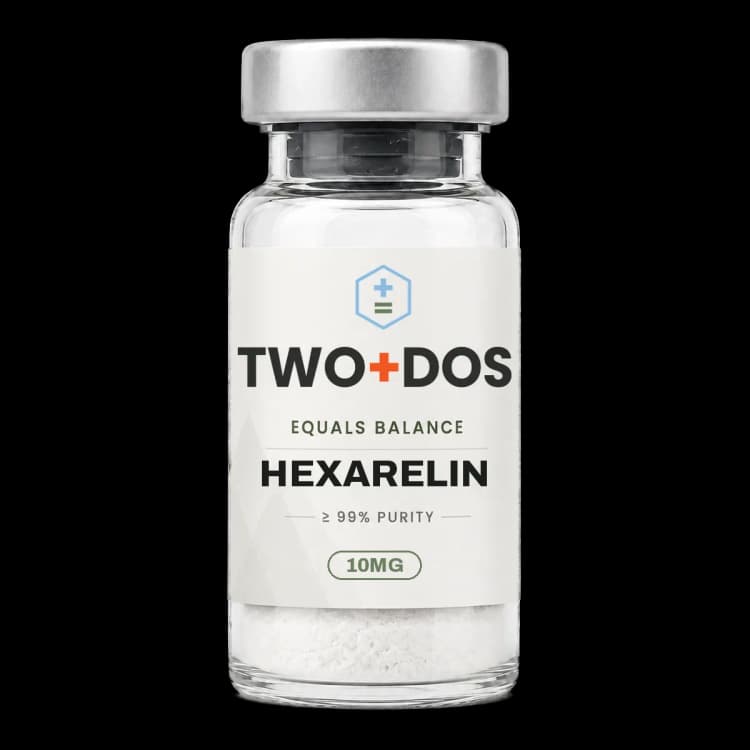
Chemical and physical properties of Hexarelin
| Peptide class | Synthetic C-terminally amidated hexapeptide of the growth hormone releasing peptide family; agonist at the growth hormone secretagogue receptor 1a and a ligand of the scavenger receptor CD36 |
|---|---|
| Sequence | His-D-2-Me-Trp-Ala-Trp-D-Phe-Lys-NH2 (six residues, amidated at the C-terminus) |
| Molecular formula | C47H58N12O6 (free peptide). Suppliers commonly list the acetate salt, which carries a variable acetate component. |
| Molecular weight | 887.0 g/mol; exact and monoisotopic mass 886.46022762 Da |
| CAS number | 140703-51-1 (free peptide); 208251-52-9 appears in registry listings for a salt form |
| PubChem CID | 6918297, indexed under the international nonproprietary name examorelin |
| InChIKey | RVWNMGKSNGWLOL-GIIHNPQRSA-N |
| Registry identifiers | UNII 09QF37C617; ChEMBL CHEMBL108335; DTXSID401032408; development codes EP-23905 and MF-6003 |
| Non-proteinogenic residues | Position 2 is D-2-methyltryptophan, carrying a methyl group on the indole ring; position 5 is D-phenylalanine. Two of six positions are D-configured |
| Computed descriptors | XLogP 2.3; topological polar surface area 301 square angstroms; 11 hydrogen-bond donors; 9 acceptors; 23 rotatable bonds; 65 heavy atoms (PubChem computed) |
| Reported cardiac binding values | Kd 14.5 nmol/L with a site density of 91 fmol/mg protein in rat cardiac membranes; the photolabelled protein has a relative molecular mass of 84,000 |
What is hexarelin?
Hexarelin is a synthetic hexapeptide first described under the development code EP-23905 and assigned the international nonproprietary name examorelin. Its six residues are L-histidine, D-2-methyltryptophan, L-alanine, L-tryptophan, D-phenylalanine and L-lysine, the C-terminus is an amide, and the resulting formula is C47H58N12O6 with a molecular weight of 887.0 g/mol.
Two of the six positions are D-configured and one carries a ring modification. Position 2 is D-2-methyltryptophan, a tryptophan bearing a methyl group at the 2-position of the indole, and position 5 is D-phenylalanine. The C-terminal lysine is amidated rather than left as a free acid. These three departures from ordinary L-amino-acid chemistry are what allow the peptide to persist in plasma long enough to be measurable.
The molecule carries an unusually heavy aromatic load for its size. Two indole rings and one benzene ring across six residues give it a computed XLogP of 2.3 and 65 heavy atoms, both higher than the amidated pentapeptides in the same family. Its topological polar surface area is 301 square angstroms and it presents 11 hydrogen-bond donors, figures consistent with a compact peptide that stays in aqueous buffer.
Which receptors does hexarelin bind?
Hexarelin engages two structurally unrelated proteins. At the growth hormone secretagogue receptor 1a it acts as an agonist, the same class A G protein-coupled receptor that acyl-ghrelin activates. In rat cardiac membranes it also binds a photolabelled protein of relative molecular mass 84,000, identified by N-terminal sequencing as the scavenger receptor CD36.
The cardiac site was characterized before it was named. Bodart and colleagues perfused Langendorff rat hearts and saw coronary perfusion pressure rise in step with exposure level, then used a photoactivatable radioligand to show a single class of binding sites with a Kd of 14.5 nmol/L and a density of 91 fmol/mg protein. Nifedipine, chelerythrine and bisindolylmaleimide each partly blocked the vasoconstriction, implicating L-type calcium channels and protein kinase C; diclofenac and 1-(7-carboxyheptyl)imidazole did not, ruling out prostaglandins and thromboxanes.
Three years later the same group identified the protein. Deglycosylation and N-terminal sequencing matched rat CD36, a glycoprotein expressed in cardiomyocytes and microvascular endothelial cells. The functional test was genetic: the coronary pressure response was absent in hearts from CD36-null mice and from spontaneously hypertensive rats that are genetically deficient in CD36. That is the strongest form of evidence available for a receptor assignment, and it is why CD36 rather than GHS-R1a is treated as the mediator of the coronary response.
Demers and colleagues then mapped the contact region. Covalent photolabelling followed by enzymatic and chemical degradation yielded an 8 kDa fragment corresponding to CD36 residues Asn132 to Glu177. Cyanogen bromide cleavage of that fragment released the free ligand, placing Met169 at the point of contact. The region overlaps the oxidized low-density lipoprotein binding site, which spans Gln155 to Lys183, and the authors proposed that competition at this overlap contributes to the reduced atherosclerotic burden reported for growth hormone releasing peptides in apolipoprotein E-deficient mice.
How does hexarelin differ from the other growth hormone releasing peptides?
Hexarelin differs from GHRP-6 by a single methyl group: both share the backbone His-D-Trp-Ala-Trp-D-Phe-Lys-NH2, and hexarelin carries a 2-methyl substituent on the indole ring of the D-tryptophan at position 2. That one addition is the structural basis for the reported differences in receptor engagement between the two hexapeptides.
The sharper separation is not between hexarelin and its peptide siblings but between peptidyl and non-peptidyl secretagogues. In the rat cardiac binding assay, unlabelled hexarelin displaced the photoligand with an IC50 of 2.9 micromol/L, while MK-0677 and EP51389, both potent growth hormone secretagogues, failed to displace it at all. Both non-displacing compounds were also devoid of vasoconstrictive activity in the perfused heart. Potency at the pituitary receptor therefore does not predict activity at the cardiac site.
That dissociation is the reason hexarelin is used as a research tool rather than as one more entry in the secretagogue list. A compound with two independent targets makes it possible to ask which endpoints survive when the pituitary axis is bypassed, and the CD36-null and CD36-deficient animal work answers that question directly for the coronary response.
A 2026 review by Dominikowski and colleagues placed hexarelin within the wider set of peptides marketed outside regulatory approval that act on the growth hormone and IGF-1 axis. The authors stratified compounds by the strength of the evidence behind each, from randomized trial data down to classes with no controlled human record at all, and contrasted the peer-reviewed pharmacology against protocols circulating outside it. They recorded hormonal disturbances, fluid retention and musculoskeletal symptoms across the classes reviewed.
What endpoints has hexarelin changed in animal and cell models?
Hexarelin has been examined in rats, mice, hamsters and human cell lines across the 2023 to 2026 literature. The reported endpoints fall into four groups: renal tubular apoptosis after ischemia and reperfusion, oxidative cytotoxicity in a neuroblastoma line carrying a superoxide dismutase mutation, inflammatory cytokine output during viral infection, and retinal ganglion cell survival after optic nerve transection.
On the kidney, Guan and colleagues gave rats 100 µg/kg per day for 7 days before a 24-hour ischemia and reperfusion challenge. The exposed animals showed less tubular necrosis and dilatation, lower serum creatinine and reduced apoptosis, with Caspase-3, Bax and Bad downregulated and the anti-apoptotic protein Bcl-2 upregulated. The same direction of change appeared in HK-2 cells under hypoxia and reoxygenation. Molecular docking flagged MDM2 as a binding partner, and MDM2 and p53 expression were both suppressed in the animal and cell arms.
On oxidative cytotoxicity, Meanti and colleagues incubated SH-SY5Y cells expressing the SOD1-G93A mutant protein for 24 hours with 150 µM hydrogen peroxide, with or without 1 µM secretagogue. Hexarelin and the related compound JMV2894 both reduced the cytotoxicity, acting through molecules that regulate apoptosis and cell survival. Two compounds at a single concentration in one mutant line is a narrow result, and the authors framed it as a starting point rather than a mechanism.
On viral inflammation, Gauvin and colleagues worked in K18-hACE2 mice infected intranasally with SARS-CoV-2. Hexarelin at 10 µmol/kg, starting 30 minutes before infection and continuing daily for 9 days, raised survival relative to vehicle. At day 3 the measured cytokine and chemokine reductions were 44 percent for CCL2, 59 percent for CCL4, 43 percent for interferon alpha and 35 percent for interferon gamma. The framing throughout is CD36 modulation of the alveolar macrophage phenotype rather than any pituitary action.
On retinal neurons, Chow reported the most granular exposure-response curve in the recent set. Golden hamsters aged 8 to 9 weeks received 25, 50 or 100 µg/kg once daily for 5 days after optic nerve transection, and retinal ganglion cell survival at day 7, quantified by Tuj1 immunostaining on retinal whole mounts, rose from 51.2 percent in the saline group to 62.4, 68.5 and 74.6 percent. A twice-daily schedule at 100 and 150 µg/kg reached 91.4 and 109.2 percent against a 72.9 percent saline comparator.
What has been measured in human volunteers?
Hexarelin has two published human studies with quantitative pituitary endpoints, both in small groups of healthy young men. Imbimbo and colleagues reported the acute growth hormone time course across three exposure levels in twelve volunteers in 1994, and Maccario and colleagues reported 24-hour secretory profiles under a repeated schedule in six volunteers in 2002.
The 1994 study was double-blind and placebo-controlled, with single boluses at 0.5, 1 and 2 µg/kg. Plasma growth hormone rose in step with exposure level, peaked at about 30 minutes and returned toward baseline with a half-life of roughly 55 minutes. Peak concentrations spanned 3.9 to 55.0 ng/mL across the range, and the response approached its ceiling at the highest level, meaning the useful measurement window sits below 2 µg/kg.
The 2002 study asked a different question: what happens under repetition. Six normal young men received hexarelin at 1.5 µg/kg either two or three times daily, with blood sampled every 20 minutes across 24 hours and multi-parameter deconvolution used to separate pulsatile secretion from clearance. Both schedules raised mean and integrated 24-hour growth hormone concentrations by the same amount, and the increase came from larger secretory pulse mass rather than more frequent pulses.
The selectivity finding from that study is the one worth recording precisely. Prolactin, adrenocorticotropin and cortisol secretion were unaltered across the sampling period, so the amplification was confined to the somatotroph and did not extend to lactotroph or corticotroph output. A 1 µg/kg challenge at the end of each 24-hour period was included specifically to monitor for down-regulation of the response.
How is hexarelin identified and confirmed analytically?
Hexarelin is identified by its monoisotopic mass of 886.4602 Da, its InChIKey RVWNMGKSNGWLOL-GIIHNPQRSA-N and CAS number 140703-51-1. Laboratories separate it by reversed-phase liquid chromatography and confirm it by high-resolution tandem mass spectrometry, the same workflow applied across the growth hormone releasing peptide class.
Two structural features make the confirmation straightforward. The molecule carries two indole rings, giving strong ultraviolet absorbance near 280 nanometres and a chromophore that most amidated pentapeptides in this family lack. The C-terminal amide shifts the parent mass by one dalton relative to the free acid, so hydrolysis at that position is directly visible in the mass spectrum rather than inferred.
A 2025 result complicates attribution rather than detection. Pobee and colleagues incubated alexamorelin with pooled human hepatocytes from ten donors and analysed the products by liquid chromatography coupled to high-resolution tandem mass spectrometry. After 3 hours the alexamorelin signal had fallen roughly 150-fold, and the only metabolite detected was examorelin, which is hexarelin, released by carboxypeptidase cleavage of an alanine residue. Finding hexarelin in a sample therefore does not by itself establish which of the two compounds was present originally.
The structural characterization of both binding sites rests on photoaffinity labelling rather than on a solved receptor complex. No structure of hexarelin bound to GHS-R1a or to CD36 has been published; the cryo-electron microscopy record for the ghrelin receptor covers ghrelin, ibutamoren, macimorelin and anamorelin. For literature searching, note that part of the record appears under the name examorelin and part under the development code EP-23905.
Summary of published research
Findings below are reported as published by the cited authors, in the model systems they used. They describe laboratory research, and none of them characterize use in humans.
Imbimbo BP, Mant T, Edwards M, Amin D, Dalton N, Boutignon F, Lenaerts V, Wüthrich P, Deghenghi R. Growth hormone-releasing activity of hexarelin in humans. A dose-response study. European Journal of Clinical Pharmacology (1994)
- Model system
- Twelve healthy male volunteers
- Conditions
- Double-blind, placebo-controlled design with single boluses at 0.5, 1 and 2 µg/kg; serial plasma growth hormone sampling
- Reported finding
- Plasma growth hormone rose in step with exposure level, peaking at about 30 minutes with a half-life of roughly 55 minutes. Peak concentrations ranged from 3.9 to 55.0 ng/mL across the three levels, with the response approaching its maximum at the highest level.
Bodart V, Bouchard JF, McNicoll N, Escher E, Carrière P, Ghigo E, Sejlitz T, Sirois MG, Lamontagne D, Ong H. Identification and characterization of a new growth hormone-releasing peptide receptor in the heart. Circulation Research (1999)
- Model system
- Langendorff-perfused rat heart and rat cardiac membrane preparations
- Conditions
- Coronary perfusion pressure measured during perfusion with the hexapeptide alone and with nifedipine, chelerythrine, bisindolylmaleimide, diclofenac or 1-(7-carboxyheptyl)imidazole; saturation and competition binding using [125I]Tyr-Bpa-Ala-hexarelin as a photoactivatable radioligand
- Reported finding
- Coronary perfusion pressure rose in step with exposure level. Saturation curves showed a single class of binding sites with a Kd of 14.5 nmol/L and a density of 91 fmol/mg protein on a photolabelled protein of relative molecular mass 84,000. Competition gave an IC50 of 2.9 micromol/L for the unlabelled hexapeptide, while MK-0677 and EP51389 did not displace the radioligand and produced no vasoconstriction.
Bodart V, Febbraio M, Demers A, McNicoll N, Pohankova P, Perreault A, Sejlitz T, Escher E, Silverstein RL, Lamontagne D, Ong H. CD36 mediates the cardiovascular action of growth hormone-releasing peptides in the heart. Circulation Research (2002)
- Model system
- Rat cardiac membranes, CD36-null mice and spontaneously hypertensive rats genetically deficient in CD36
- Conditions
- Photoaffinity labelling followed by lectin affinity chromatography, preparative gel electrophoresis, deglycosylation and N-terminal sequencing; coronary perfusion pressure compared across wild-type and CD36-deficient hearts
- Reported finding
- The 84,000 relative molecular mass binding protein was sequenced as rat CD36, a glycoprotein expressed in cardiomyocytes and microvascular endothelial cells. The coronary perfusion pressure response was absent in hearts from CD36-null mice and from CD36-deficient spontaneously hypertensive rats, and the size of the vasoconstrictive response tracked CD36 expression measured by immunoblotting.
Maccario M, Veldhuis JD, Broglio F, Di Vito L, Arvat E, Deghenghi R, Ghigo E. Impact of two or three daily subcutaneous injections of hexarelin, a synthetic growth hormone (GH) secretagogue, on 24-h GH, prolactin, adrenocorticotropin and cortisol secretion in humans. European Journal of Endocrinology (2002)
- Model system
- Six healthy young men
- Conditions
- Intermittent daily exposure at 1.5 µg/kg on either a twice-daily or three-times-daily schedule, with blood sampled every 20 minutes across 24 hours and multi-parameter deconvolution analysis applied; a 1 µg/kg challenge closed each sampling period to monitor down-regulation
- Reported finding
- Mean and integrated 24-hour growth hormone concentrations rose to the same extent under both schedules, and the increase came from selectively amplified growth hormone secretory pulse mass rather than greater pulse frequency. Prolactin, adrenocorticotropin and cortisol secretion were unaltered, confining the effect to the somatotroph.
Demers A, McNicoll N, Febbraio M, Servant M, Marleau S, Silverstein R, Ong H. Identification of the growth hormone-releasing peptide binding site in CD36: a photoaffinity cross-linking study. Biochemical Journal (2004)
- Model system
- Purified CD36 protein; photoaffinity cross-linking with enzymatic and chemical degradation
- Conditions
- Covalent photolabelling of CD36 followed by proteolytic and cyanogen bromide cleavage of the photoligand-receptor complex, with fragment mapping against the known oxidized low-density lipoprotein binding region
- Reported finding
- An 8 kDa photolabelled fragment corresponding to CD36 residues Asn132 to Glu177 was identified as the binding site, and cyanogen bromide cleavage released the free ligand, placing Met169 as the contact point in the binding pocket. This domain overlaps the oxidized low-density lipoprotein site at Gln155 to Lys183, giving a structural basis for competition with modified lipoprotein uptake by macrophages.
Meanti R, Licata M, Rizzi L, Bresciani E, Molteni L, Coco S, Locatelli V, Omeljaniuk RJ, Torsello A. Protective Effects of Hexarelin and JMV2894 in a Human Neuroblastoma Cell Line Expressing the SOD1-G93A Mutated Protein. International Journal of Molecular Sciences (2023)
- Model system
- SH-SY5Y human neuroblastoma cells expressing the SOD1-G93A mutant protein
- Conditions
- 24-hour incubation with 150 µM hydrogen peroxide in the absence or presence of 1 µM growth hormone secretagogue
- Reported finding
- Both hexarelin and JMV2894 reduced hydrogen peroxide-induced cytotoxicity in the mutant line, acting through molecules that regulate apoptosis and promote cell survival. The authors noted that the molecular mechanism remains unclarified and framed the result as a basis for further work rather than a defined pathway.
Guan C, Li C, Shen X, Yang C, Liu Z, Zhang N, Xu L, Zhao L, Zhou B, Man X, Luo C, Luan H, Che L, Wang Y, Xu Y. Hexarelin alleviates apoptosis on ischemic acute kidney injury via MDM2/p53 pathway. European Journal of Medical Research (2023)
- Model system
- Rat ischemia and reperfusion model of acute kidney injury, plus HK-2 cells under hypoxia and reoxygenation
- Conditions
- 100 µg/kg per day for 7 days before the ischemic challenge, with tissue collected 24 hours after reperfusion; kidney function, histology and apoptosis assessed; molecular docking performed with a pharmmapper server and AutoDock
- Reported finding
- Prior exposure reduced tubular necrosis and dilatation, lowered serum creatinine and inhibited apoptosis, downregulating Caspase-3, Bax and Bad while upregulating Bcl-2. The same direction of change appeared in post-hypoxia HK-2 cells. Docking indicated strong binding to MDM2, and MDM2 and p53 expression were significantly suppressed in both the animal and cell arms.
Gauvin J, Huynh DN, Dubuc I, Lê C, Tugores R, Flamand N, Flamand L, Lubell WD, Ong H, Marleau S. Pharmacological targeting of the hyper-inflammatory response to SARS-CoV-2-infected K18-hACE2 mice using a cluster of differentiation 36 receptor modulator. Frontiers in Pharmacology (2024)
- Model system
- K18-hACE2 transgenic mice infected intranasally with SARS-CoV-2
- Conditions
- Hexarelin at 10 µmol/kg beginning 30 minutes before viral challenge and continuing once daily for 9 days, against vehicle; cytokine and chemokine panels measured at day 3 after infection
- Reported finding
- Survival rose relative to vehicle in the infected animals. At day 3 the measured reductions were 44 percent for CCL2, 59 percent for CCL4, 43 percent for interferon alpha and 35 percent for interferon gamma. The authors attributed the result to CD36-dependent modulation of the alveolar macrophage inflammatory phenotype.
Pobee E, Daziani G, Gameli PS, Basile G, Carlier J, Tini A. Identification of alexamorelin consumption biomarkers using human hepatocyte incubations and high-resolution mass spectrometry. Journal of Analytical Toxicology (2025)
- Model system
- Pooled human hepatocytes from ten donors, with in silico metabolite prediction
- Conditions
- GLORYx software used for single-reaction metabolite prediction, followed by hepatocyte incubation and analysis by liquid chromatography coupled to high-resolution tandem mass spectrometry with Compound Discoverer processing
- Reported finding
- Twenty-one single-reaction metabolites were predicted, with N-acetylation scoring highest at 98 percent probability. After 3 hours of incubation the alexamorelin signal had fallen roughly 150-fold and the only metabolite detected was examorelin, which is hexarelin, formed by carboxypeptidase cleavage of an alanine residue. Because examorelin is itself a commercially supplied compound, its presence is not specific to alexamorelin.
Chow KBS. Hexarelin promotes the survival of retinal ganglion cells after optic nerve transection. Indian Journal of Pharmacology (2026)
- Model system
- Golden hamsters aged 8 to 9 weeks, optic nerve transection model
- Conditions
- 25, 50 or 100 µg/kg once daily for 5 days, and 100 or 150 µg/kg twice daily for 5 days, against saline; retinal ganglion cell survival quantified at day 7 by Tuj1 immunostaining on retinal whole mounts
- Reported finding
- Once-daily exposure raised retinal ganglion cell survival in step with exposure level, from 51.2 percent in the saline group to 62.4, 68.5 and 74.6 percent across the three levels. The twice-daily schedule reached 91.4 percent at 100 µg/kg and 109.2 percent at 150 µg/kg against a 72.9 percent saline comparator.
Dominikowski A, Rękoś Z, Olejarz M, Szczepanek-Parulska E, Domin R, Ruchała M. The emerging landscape of performance-enhancing peptides modulating GH-IGF1 axis: bridging the gap between clinical evidence and patient self-administration. Frontiers in Endocrinology (2026)
- Model system
- Narrative review
- Conditions
- Compounds acting on the growth hormone and IGF-1 axis sorted into evidence tiers ranging from randomized trial data to classes with no controlled human record, with structural and pharmacological characteristics tabulated alongside recorded harms
- Reported finding
- Hexarelin was placed among the growth hormone secretagogues circulating without regulatory approval for physique or performance indications. Across the classes reviewed the authors recorded hormonal disturbances, fluid retention and musculoskeletal symptoms, and proposed an assessment framework built around exposure history and symptom evaluation.
What laboratory handling information is published?
Hexarelin is supplied as a lyophilized solid, usually as the acetate salt, and published handling figures come from supplier specifications rather than from peer-reviewed measurement. Vendor listings on PubChem include a grade specified at 90 percent or higher purity by HPLC, so purity varies by source and should be confirmed against the certificate accompanying the lot rather than assumed.
Salt form is the first thing to record. CAS number 140703-51-1 and PubChem CID 6918297 describe the free peptide, formula C47H58N12O6, molecular weight 887.0 g/mol. The acetate salt carries a variable acetate component and therefore a different mass per vial, and registry listings also show 208251-52-9 for a salt form. Peptide content by weight differs between the two, which matters whenever a stated milligram figure is converted to moles.
Three chemical features bear on storage. The C-terminal amide can hydrolyse to the free acid, a one-dalton shift that is the most useful degradation marker for this molecule by mass spectrometry. The two indole rings are the residues most exposed to oxidation and to light, so amber containers and cold storage matter more here than for peptides without tryptophan. The lysine side-chain amine is the reactive handle most likely to take part in unwanted acylation.
A computed XLogP of 2.3 sits at the upper end for a peptide of this size, driven by the aromatic load, and the topological polar surface area of 301 square angstroms indicates a molecule that stays in aqueous buffer rather than partitioning into membranes. The same aromatic residues assist analytical work: absorbance near 280 nanometres allows concentration to be checked by ultraviolet spectrophotometry without a separate assay.
Frequently asked research questions
What is the molecular weight of hexarelin?
887.0 g/mol for the free peptide, with an exact and monoisotopic mass of 886.46022762 Da and the formula C47H58N12O6 (PubChem CID 6918297). The acetate salt supplied by most vendors carries an additional variable acetate component and therefore a higher measured mass per vial.
Which receptors does hexarelin bind?
Two. It is an agonist at the growth hormone secretagogue receptor 1a, the class A G protein-coupled receptor whose endogenous ligand is acyl-ghrelin, and it binds the scavenger receptor CD36. The cardiac CD36 site was characterized in rat cardiac membranes with a Kd of 14.5 nmol/L and a density of 91 fmol/mg protein, and its identity was confirmed by the loss of the coronary response in CD36-null mice.
How does hexarelin differ from GHRP-6?
By one methyl group. Both are hexapeptides built on His-D-Trp-Ala-Trp-D-Phe-Lys-NH2, and hexarelin carries a 2-methyl substituent on the indole ring of the D-tryptophan at position 2, giving the sequence His-D-2-Me-Trp-Ala-Trp-D-Phe-Lys-NH2 and a molecular weight of 887.0 g/mol against 873.0 for GHRP-6 (PubChem CID 4345065, C46H56N12O6).
Why does hexarelin complicate analytical attribution for alexamorelin?
Because it is alexamorelin's principal hepatocyte metabolite. Pobee and colleagues reported in 2025 that after 3 hours of incubation with pooled human hepatocytes the alexamorelin signal had fallen roughly 150-fold, and the single metabolite detected was examorelin, which is hexarelin, released by carboxypeptidase cleavage of an alanine residue. Detecting hexarelin therefore does not identify which compound was present at the outset.
Has a structure of hexarelin bound to its receptor been published?
No. Both binding sites were mapped by photoaffinity labelling rather than by structural determination: CD36 residues Asn132 to Glu177 with Met169 as the contact point, from cross-linking work published in 2004. The cryo-electron microscopy record for the ghrelin receptor covers ghrelin, ibutamoren, macimorelin and anamorelin, none of them hexarelin.
Hexarelin at TWO+DOS
TWO+DOS supplies Hexarelin as a research-use-only compound, third-party tested, with certificates of analysis emailed immediately on request.
View the Hexarelin (10mg)listing →Related research overviews
References
- PubChem CID 6918297 (examorelin): formula, exact mass, InChIKey and computed descriptors
- Imbimbo et al. 1994, European Journal of Clinical Pharmacology (PMID 7957536)
- Bodart et al. 1999, Circulation Research (PMID 10532947)
- Bodart et al. 2002, Circulation Research (PMID 11988484)
- Maccario et al. 2002, European Journal of Endocrinology (PMID 11888836)
- Demers et al. 2004, Biochemical Journal (PMID 15176951)
- Meanti et al. 2023, International Journal of Molecular Sciences (PMID 36674509)
- Guan et al. 2023, European Journal of Medical Research (PMID 37710348)
- Gauvin et al. 2024, Frontiers in Pharmacology (PMID 38384295)
- Pobee et al. 2025, Journal of Analytical Toxicology (PMID 40465419)
- Chow 2026, Indian Journal of Pharmacology (PMID 41766237)
- Dominikowski et al. 2026, Frontiers in Endocrinology (PMID 42395176)
For research use only. Not for human or veterinary use. Not for diagnostic or therapeutic use.